Read Time:
3 mins

Scaling for the Peak – How a Global Retailer Hired 50,000 Workers in One Month
By

A Real-World Hiring Challenge: The Seasonal Tsunami

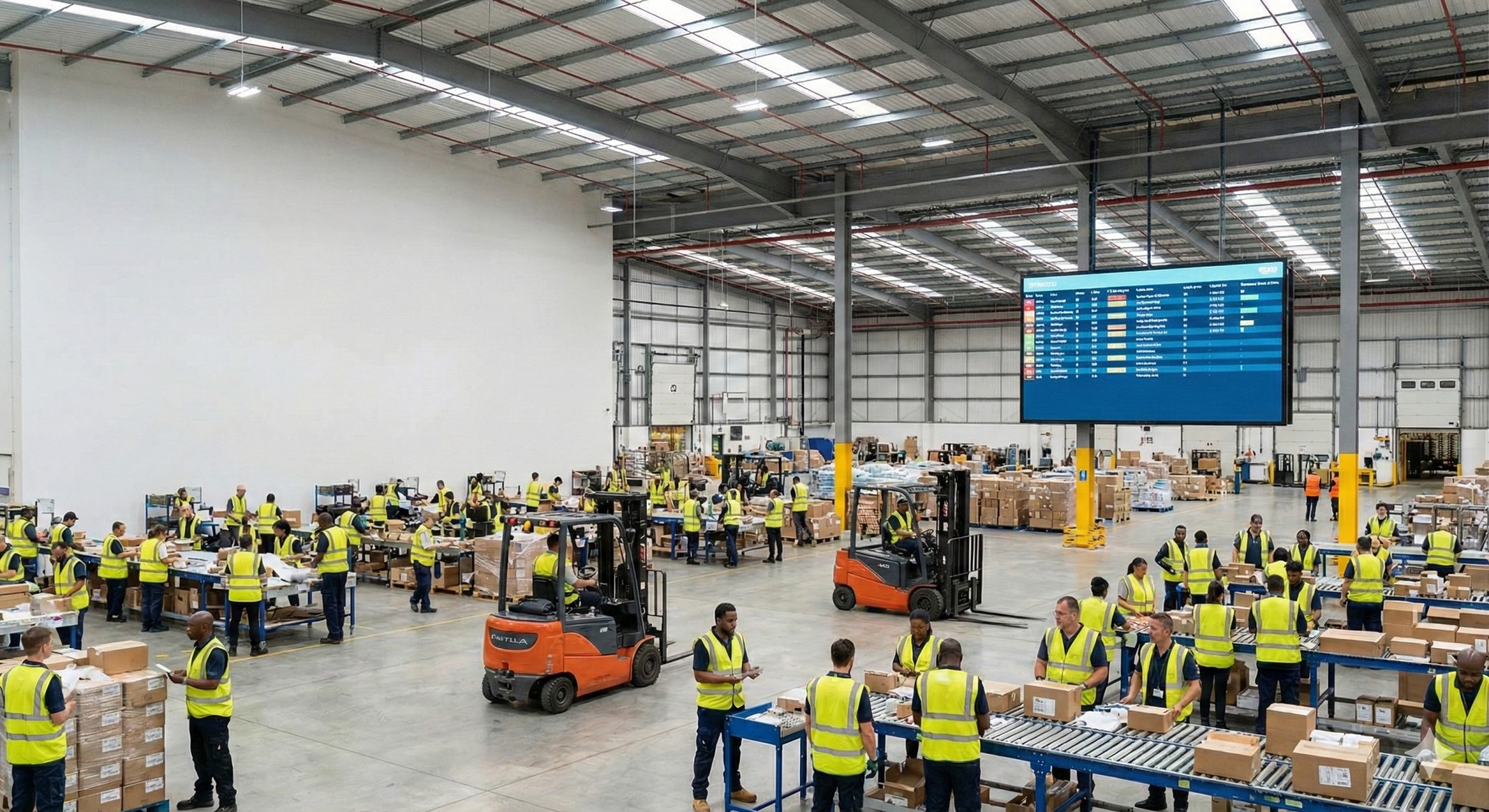
A major global fashion retailer faced a recurring nightmare every holiday season: the need to hire over 50,000 seasonal staff across hundreds of locations in just a few weeks. The sheer volume of applications was staggering—nearly half a million candidates.

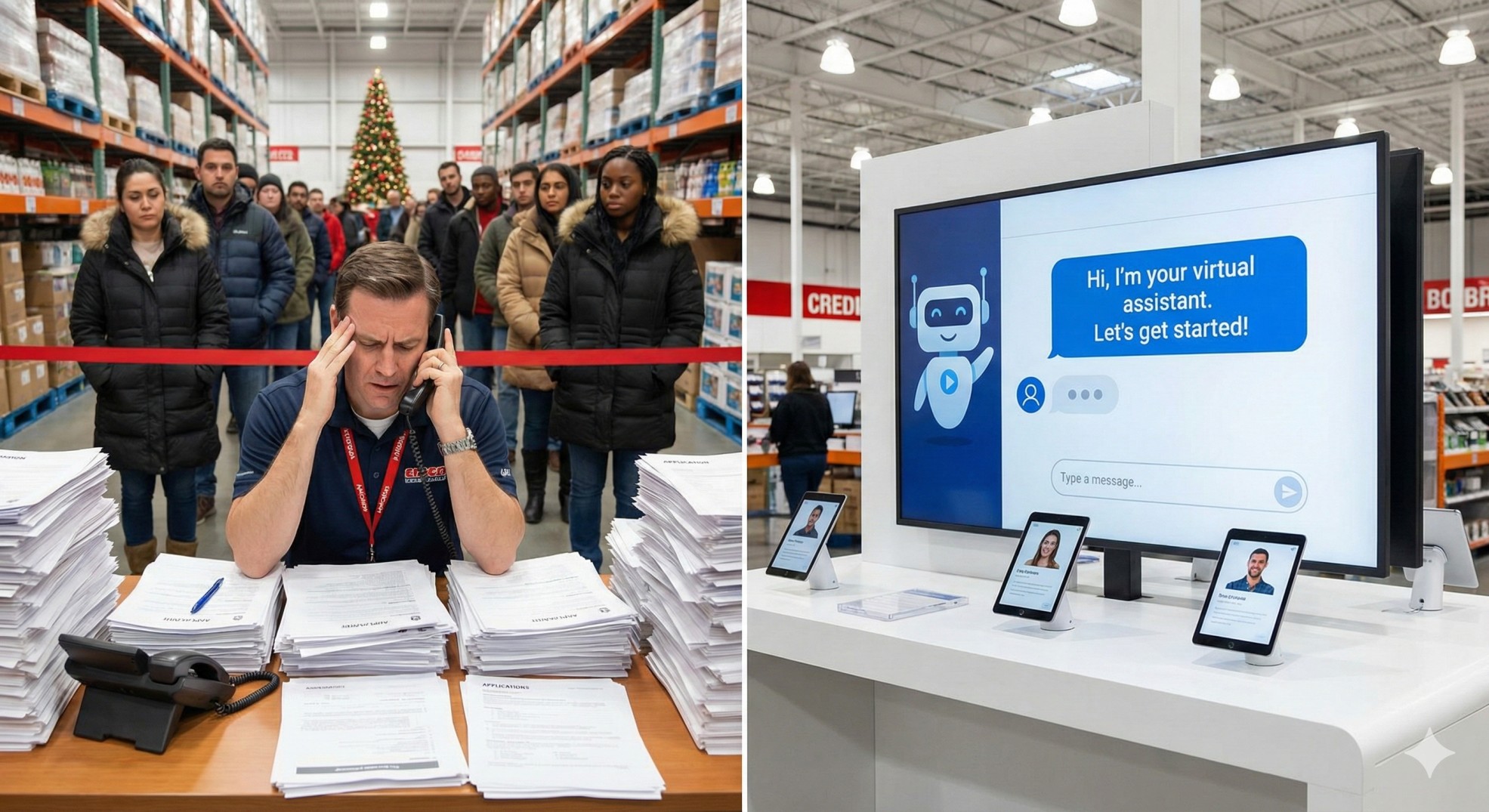
Traditionally, store managers and regional recruiters spent their entire day sorting through paper applications and digital resumes. This left them with zero time to actually train the new hires or manage the store floor during the busiest shopping days of the year. The "human" element of retail was being buried under a mountain of administration.

To combat this, the retailer implemented a Conversational AI Screening Tool. Instead of a human reading every CV, an AI-powered assistant engaged candidates the moment they applied, verified their availability, and conducted basic situational judgment tests.
(Image generated using AI)

How This Reclaims the Recruiter’s Calendar

By the time a store manager looked at their dashboard, the "screening" was already done. The AI only presented candidates who were qualified and available. This saved the company an estimated 100,000+ hours across their global network.

Recruiters and managers used this reclaimed time to focus on:

  • Onboarding Excellence: Spending time on high-quality training so staff could deliver better customer service from day one.
  • Employee Experience: Focus on staff retention and morale during high-stress sales periods.
  • Leadership Development: Identifying high-potential seasonal workers who could be transitioned into permanent management roles.
(Image generated using AI)

The Subtle Evolution of High-Volume Hiring

Managing scale shouldn't mean sacrificing quality. This is why platforms like CBREX focus on the heavy lifting of early screening and talent matching. By using AI to handle the volume and logistics, the platform ensures recruiters only spend their energy on the final, most important decisions.

Looking Ahead

The retail giant didn't just meet their hiring goals; they did it with 60% less administrative overhead. By letting AI manage the "tsunami" of applications, the humans were free to do what they do best: lead their teams and serve their customers.

Table of contents

Sign up for regular updates
Get all the news delivered to your inbox.
Thank you! Your submission has been received!
Oops! Something went wrong while submitting the form.

Similar blogs

Read Time :
2 Mins
Time-to-Productivity: The Hidden ROI of Technical Accuracy
In 2026, Time-to-Productivity (TTP) has replaced speed as the vital hiring metric. AI-driven recruitment exchanges boost this by using precision vetting and standardized assessments to ensure technical accuracy. By focusing on verified skills, organizations reduce costly "false positive" hires, accelerating onboarding and protecting overall ROI.
Read Time :
3 MINS
The "Recruiter Seat" Tax: Lowering Software Op-Ex in 2026
To cut "Recruiter Seat Tax" in 2026, firms are ditching costly SaaS licenses for recruitment exchanges. This shift replaces high software spend with outcome-based hiring, using one platform to access global talent and specialized vendors more efficiently.
Read Time :
2 Mins
The Recruitment Purge: Consolidating 100+ Vendors into One Platform
Managing fragmented recruitment vendors in 2026 creates costly administrative bottlenecks. The recruitment exchange model solves this by consolidating multiple contracts and data streams into a single platform under one Master Service Agreement. By centralizing procurement and utilizing AI-driven matching, organizations reduce operational friction, gain clear performance visibility, and scale hiring efficiently without losing access to specialized talent.