Read Time:

AI-Powered Diversity Hiring: Making Inclusion Intentional

By

Diversity and inclusion are no longer optional — they’re essential to organizational success. Yet unconscious bias often creeps in during recruitment, especially in early-stage screening where volume is high and decisions are made quickly.

AI is quietly helping recruiters make diversity a deliberate part of the hiring process, without replacing human judgment.

A real-world example: screening without bias

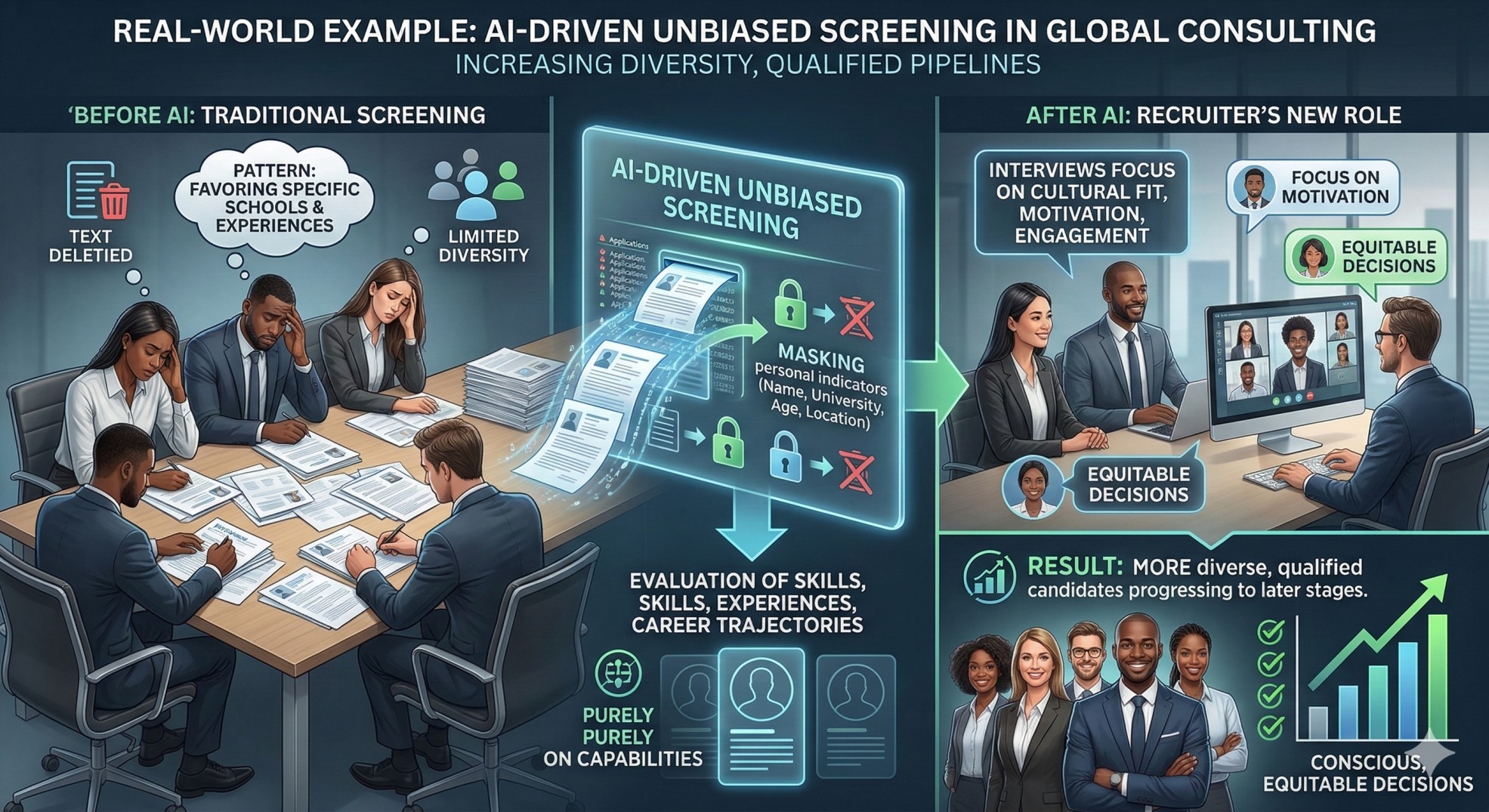
A global consulting firm was committed to increasing diversity in hiring. However, recruiters noticed patterns in early-stage screening that favored certain educational backgrounds and experiences, often unintentionally.

The firm introduced AI-driven screening that masked demographic and personal indicators while evaluating skills, experiences, and career trajectories. AI-generated shortlists were based purely on capabilities, allowing recruiters to focus on cultural fit, motivation, and engagement during interviews.

The result? More diverse, qualified candidates progressing to later stages — and recruiters able to make conscious, equitable decisions.
How AI supports intentional diversity

Across organizations, AI helps recruitment teams:

  • Remove unconscious bias: Screen candidates without influence from age, gender, or background.

  • Highlight transferable skills: Identify potential beyond traditional career paths.

  • Ensure consistency: Apply uniform evaluation criteria across all applicants.

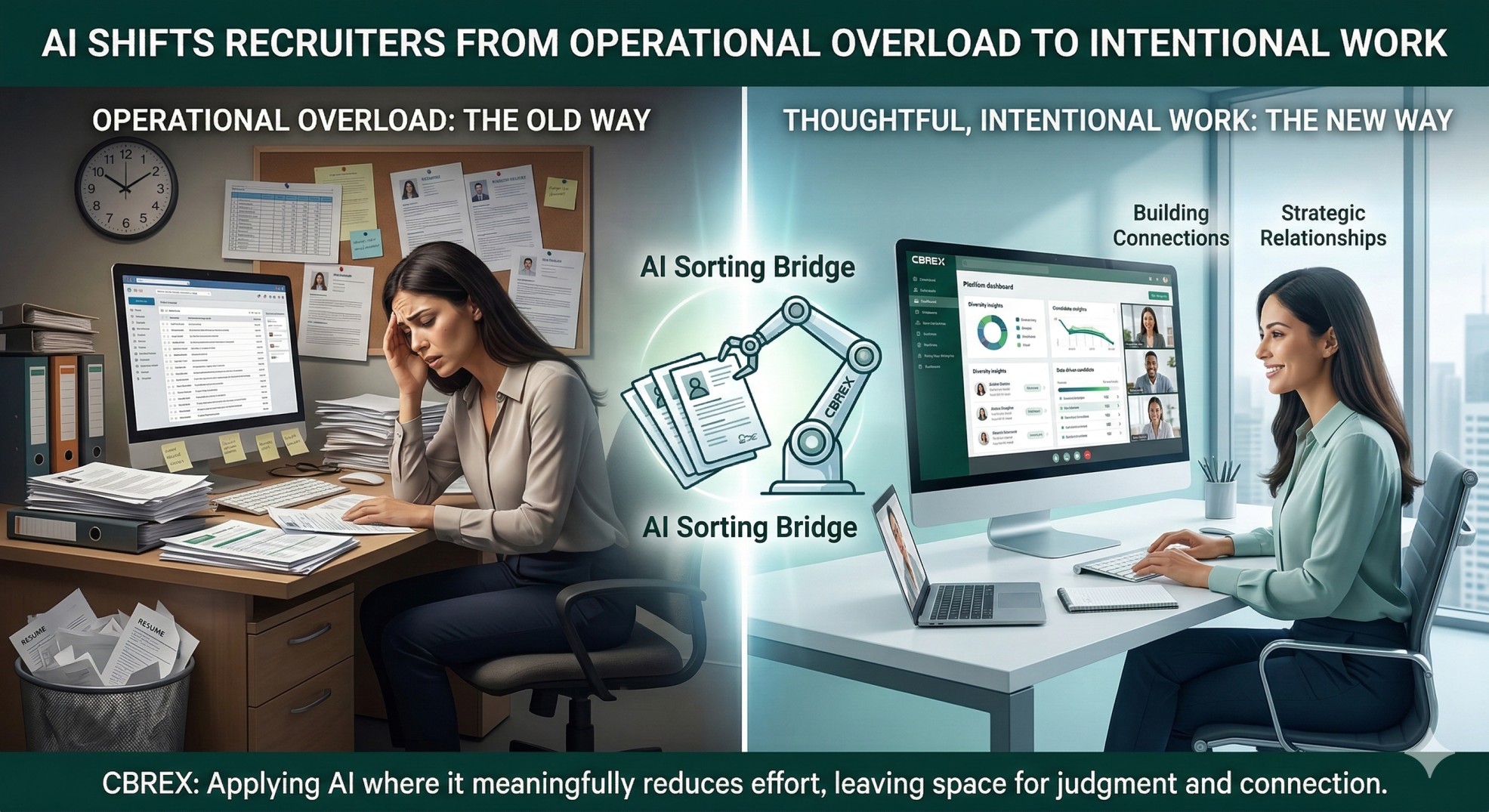
  • Free up recruiter time: Allow humans to focus on relationship-building and inclusive conversations.

AI doesn’t replace human judgment — it creates a structured, fair starting point for it.
From compliance to culture

With AI handling early-stage fairness:

  • Recruiters can devote more attention to inclusive interviews.

  • Hiring decisions are guided by skills, potential, and alignment rather than assumptions.

  • Organizations see improved representation in mid- and senior-level roles.

This transforms diversity from a checklist into a strategic advantage.
A quiet role for platforms in diversity hiring

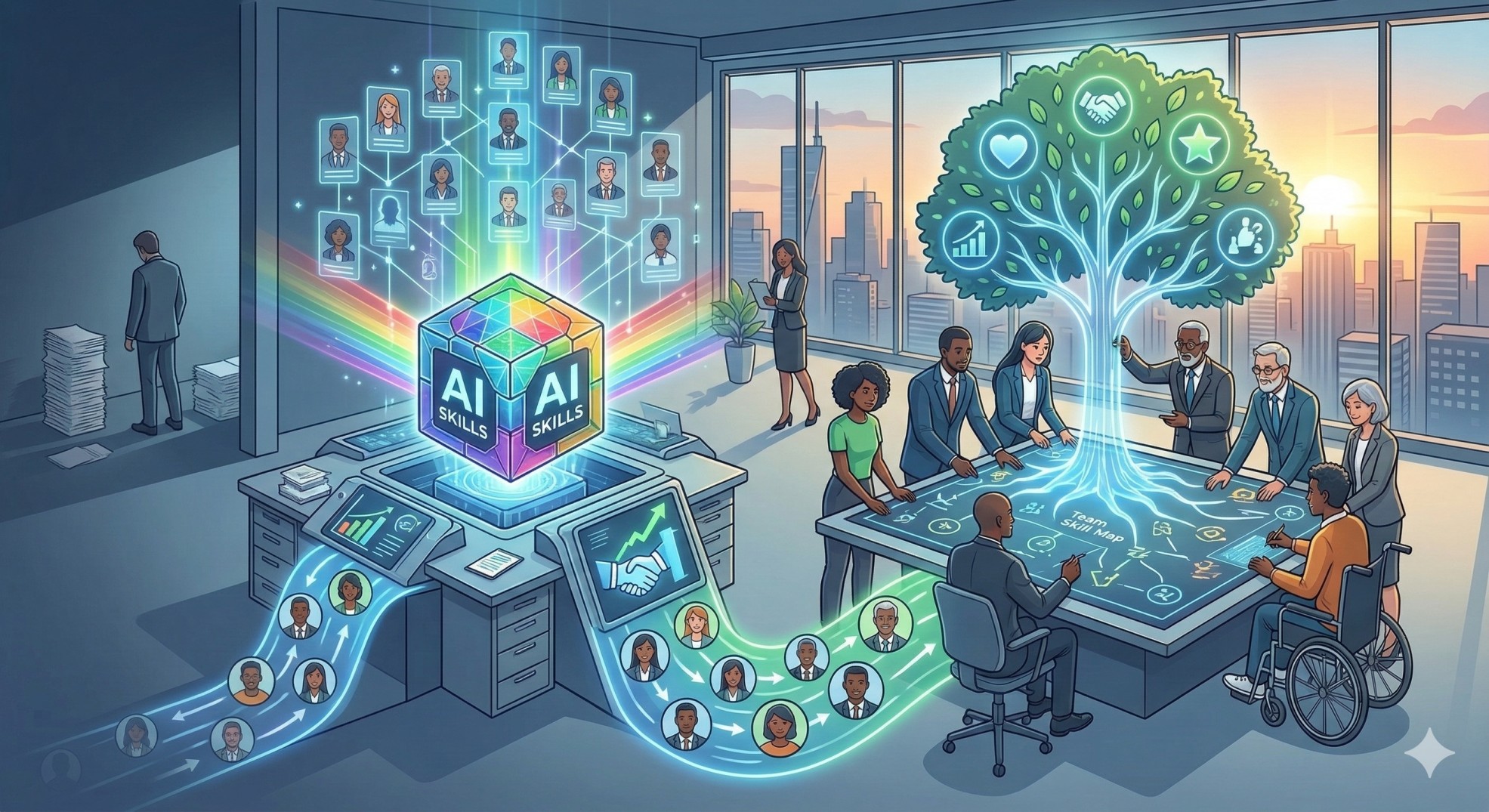
Platforms like CBREX integrate AI to support fair and structured screening without removing recruiter control. AI helps surface diverse talent pools while recruiters retain judgment, ensuring both equity and quality in hiring decisions.

The takeaway

AI doesn’t hire for inclusion — recruiters do.

But by removing structural bias from early screening, AI gives recruiters the space to focus on intentional, human-centered hiring. The combination of machine precision and human judgment creates a recruitment process that is not only fair but also smarter and more effective.

Table of contents

Sign up for regular updates
Get all the news delivered to your inbox.
Thank you! Your submission has been received!
Oops! Something went wrong while submitting the form.

Similar blogs

Read Time :
2 Mins
Time-to-Productivity: The Hidden ROI of Technical Accuracy
In 2026, Time-to-Productivity (TTP) has replaced speed as the vital hiring metric. AI-driven recruitment exchanges boost this by using precision vetting and standardized assessments to ensure technical accuracy. By focusing on verified skills, organizations reduce costly "false positive" hires, accelerating onboarding and protecting overall ROI.
Read Time :
3 MINS
The "Recruiter Seat" Tax: Lowering Software Op-Ex in 2026
To cut "Recruiter Seat Tax" in 2026, firms are ditching costly SaaS licenses for recruitment exchanges. This shift replaces high software spend with outcome-based hiring, using one platform to access global talent and specialized vendors more efficiently.
Read Time :
2 Mins
The Recruitment Purge: Consolidating 100+ Vendors into One Platform
Managing fragmented recruitment vendors in 2026 creates costly administrative bottlenecks. The recruitment exchange model solves this by consolidating multiple contracts and data streams into a single platform under one Master Service Agreement. By centralizing procurement and utilizing AI-driven matching, organizations reduce operational friction, gain clear performance visibility, and scale hiring efficiently without losing access to specialized talent.