Read Time:
3 MINS
How AI Is Quietly Powering the World’s Best Recruiting Teams


Across industries and geographies, recruitment teams are adopting AI in ways that are practical, measured, and quietly transformative. This shift isn’t driven by trends or buzzwords — it’s driven by real hiring pressure and the need to do more with limited time and resources.
A large multinational organization hiring for both entry-level and specialised roles was facing a familiar issue: application overload. Every open role attracted hundreds, sometimes thousands, of resumes. Recruiters spent most of their time screening profiles manually, leaving little room for meaningful candidate conversations or strategic planning.
To address this, the organization introduced AI-driven resume screening and skill-matching at the early stages of hiring. Instead of reviewing every resume individually, recruiters received structured shortlists based on role requirements, experience relevance, and skills alignment.
The outcome wasn’t fewer recruiters — it was better use of recruiter time.
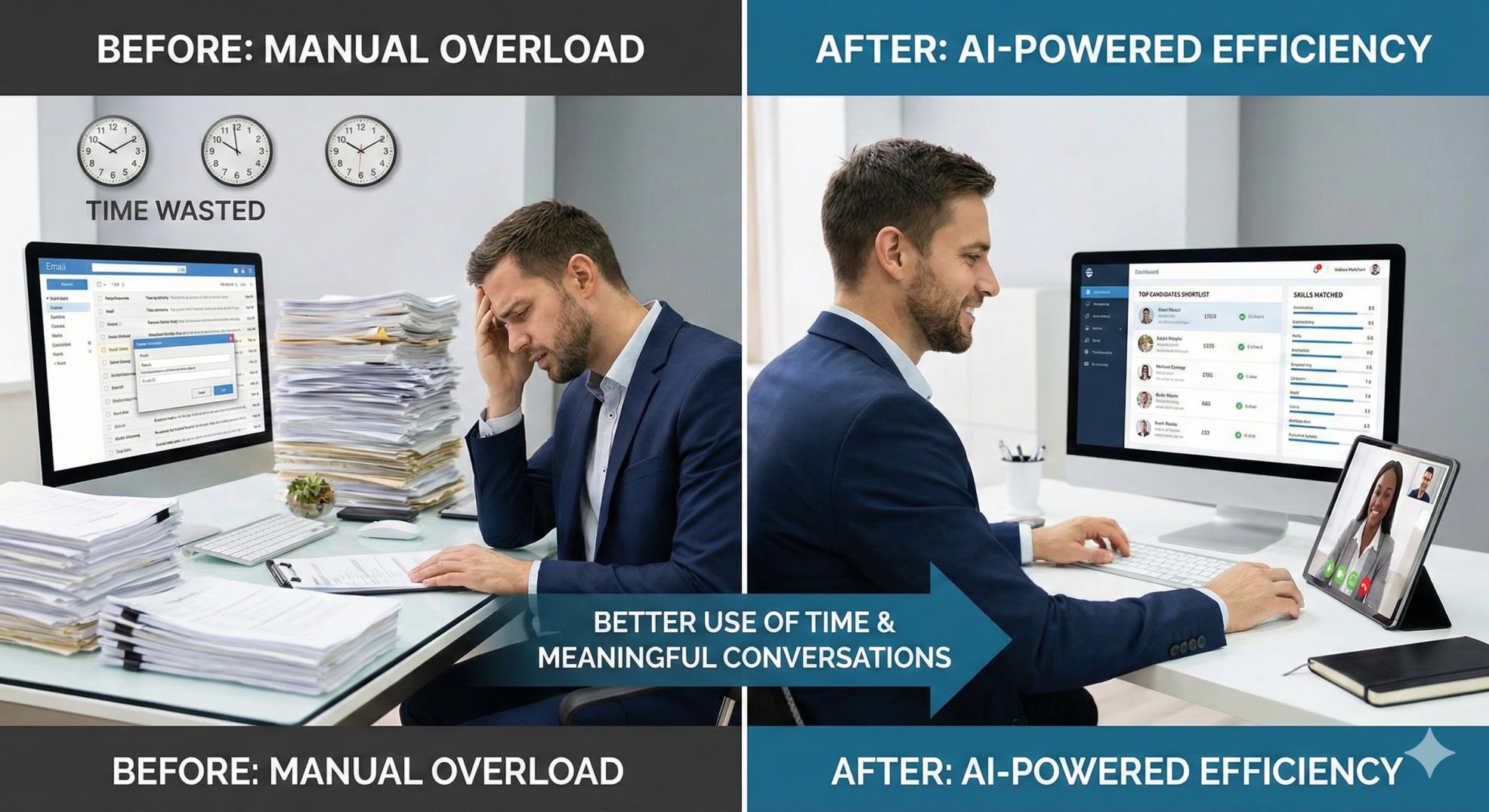
This approach is no longer unique. Many enterprises and recruitment firms now rely on AI to support different stages of the hiring process.
In practice, AI is helping recruiters to:
Importantly, recruiters remain in control. AI provides structure and insights, while humans make the final decisions.
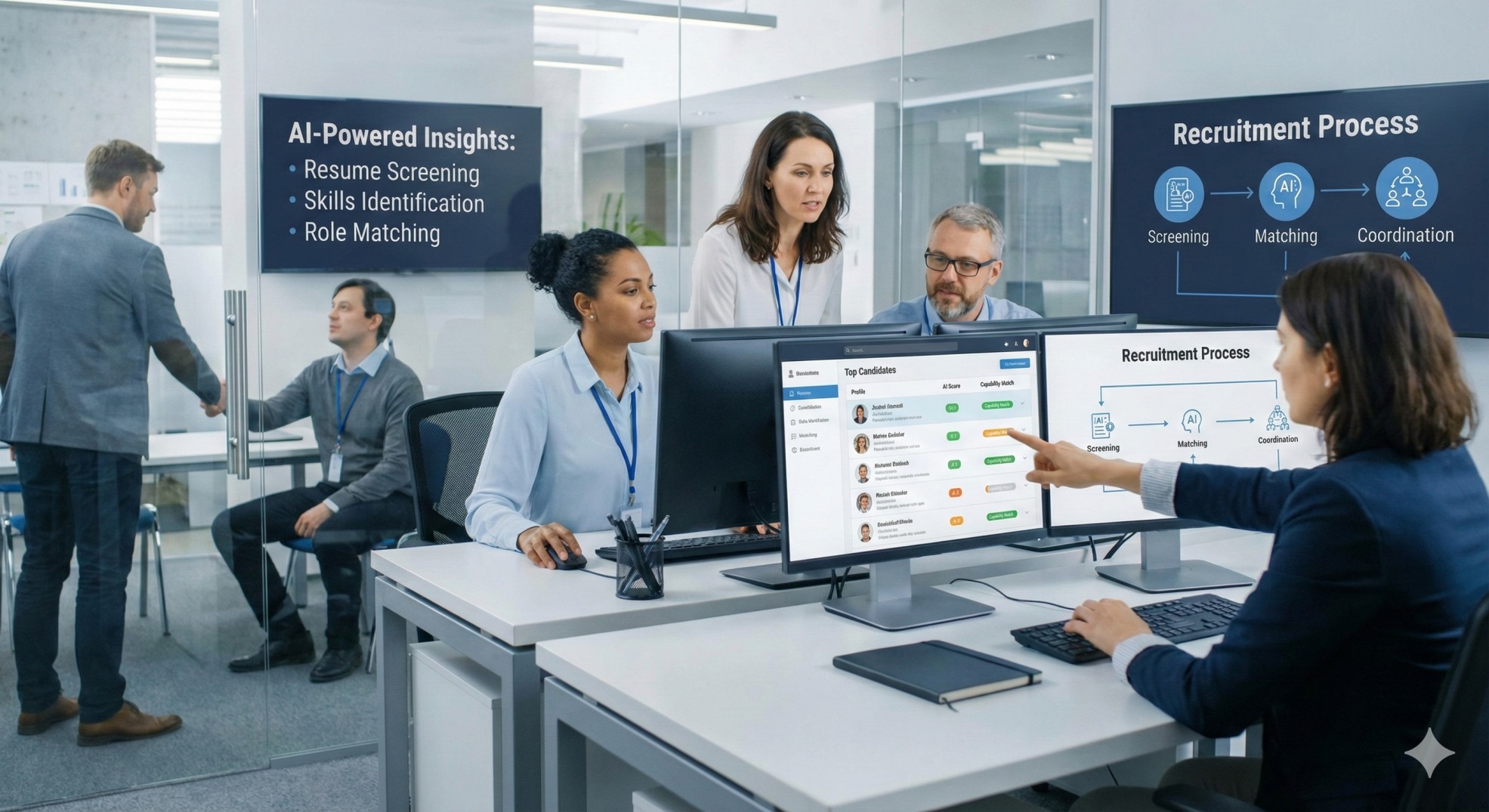
When early-stage screening and matching are supported by AI, recruiters experience a noticeable shift in how they work.
Instead of spending hours on manual filtering, recruiters can:
This leads to fewer late-stage surprises and more confidence throughout the hiring process.

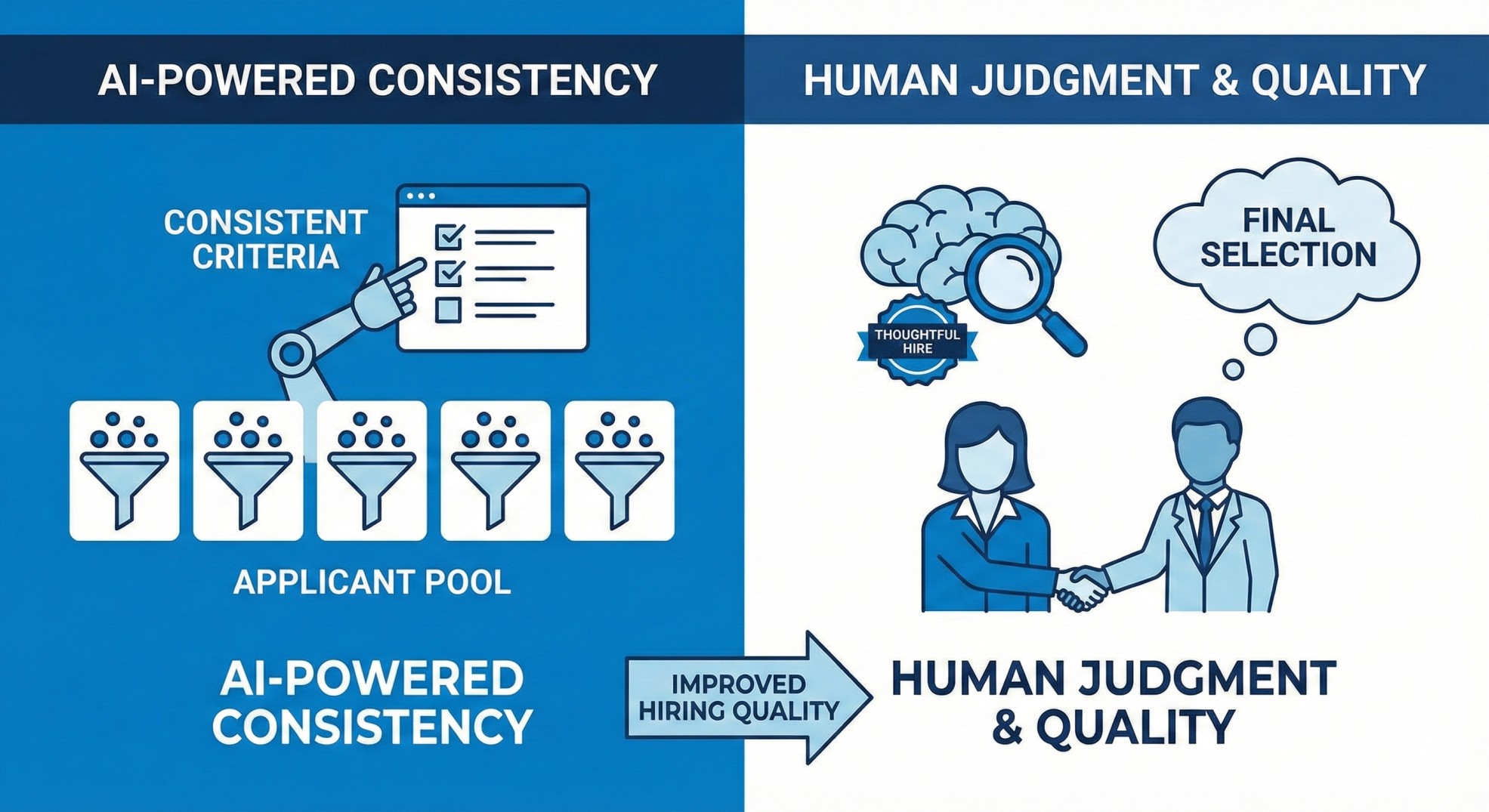
While faster hiring is often highlighted, the more meaningful impact of AI lies in consistency and quality.
By applying the same evaluation criteria across large applicant pools, AI helps reduce variability in screening. Recruiters can then apply judgment, context, and experience where it matters most — during interviews, assessments, and final selection.
The result is a hiring process that is not only quicker, but more thoughtful.
As recruitment workflows evolve, technology platforms are increasingly expected to operate quietly in the background — supporting scale, improving consistency, and fitting into how recruiters already work.
CBREX has been built around this philosophy. Rather than trying to automate decision-making, it applies AI to the parts of hiring that benefit most from structure and scale — such as early screening and talent matching — while leaving judgment, context, and final decisions with recruiters.
The emphasis is not on replacing recruiter expertise, but on supporting it, particularly in complex, niche, and cross-border hiring environments where clarity and control matter most.
The future of recruitment is not fully automated. It is collaborative.
AI will continue to manage scale and consistency. Recruiters will continue to bring judgment, relationships, and insight. Together, they create a hiring model that is efficient, human, and sustainable — and that future is already taking shape.


