Read Time:
Recruitment Agency in Uganda: How to Hire Through Vetted Specialist Agencies (2026)


To hire in Uganda from India, pick a recruitment agency in Uganda that works on pay-on-hire terms, check its registration and references before you sign, and agree the fee trigger and replacement terms in writing. Run the search through one contract, and a first shortlist can arrive within 24 hours.
CBREX is an AI-powered recruiting marketplace. One contract and one invoice give Indian employers access to 4,000+ specialist recruiting firms across 55 countries, and Uganda is among the countries we cover. This guide is for employers, not job seekers. It explains what a Ugandan agency does, how fees work, which checks to run, and how we route Uganda roles.
A recruitment agency in Uganda finds, screens and presents candidates for a role you want filled, then manages interviews and offers until someone joins. The employer pays the fee, ideally only when a hire is made. Local agencies add knowledge of Ugandan salary norms, notice periods and talent pools that an overseas team rarely has.
In practice the work splits into five jobs: reading your brief, sourcing (including passive candidates who never answer job ads), a first-round screen, shortlist presentation, and offer support. Good agencies also tell you when your brief is unrealistic for the local market.
One limit matters. An agency finds the person; it does not employ them. How you employ a Ugandan hire, through a local entity or an employer of record, is a separate decision. Settle it early so the offer does not stall.
Hire in Uganda from India in six steps: write a brief with local pay benchmarks, choose a fee model, verify the agency, sign terms in writing, review a ranked shortlist, then interview and make the offer. Using an agency means you need no Ugandan sourcing team of your own.
On CBREX, qualified candidates usually start arriving 24 to 72 hours after a role opens, and typical time-to-hire across our searches runs 15 to 45 days. These are platform-wide figures, not a Uganda-specific promise. Notice periods and the employment structure you choose can add time on your side.
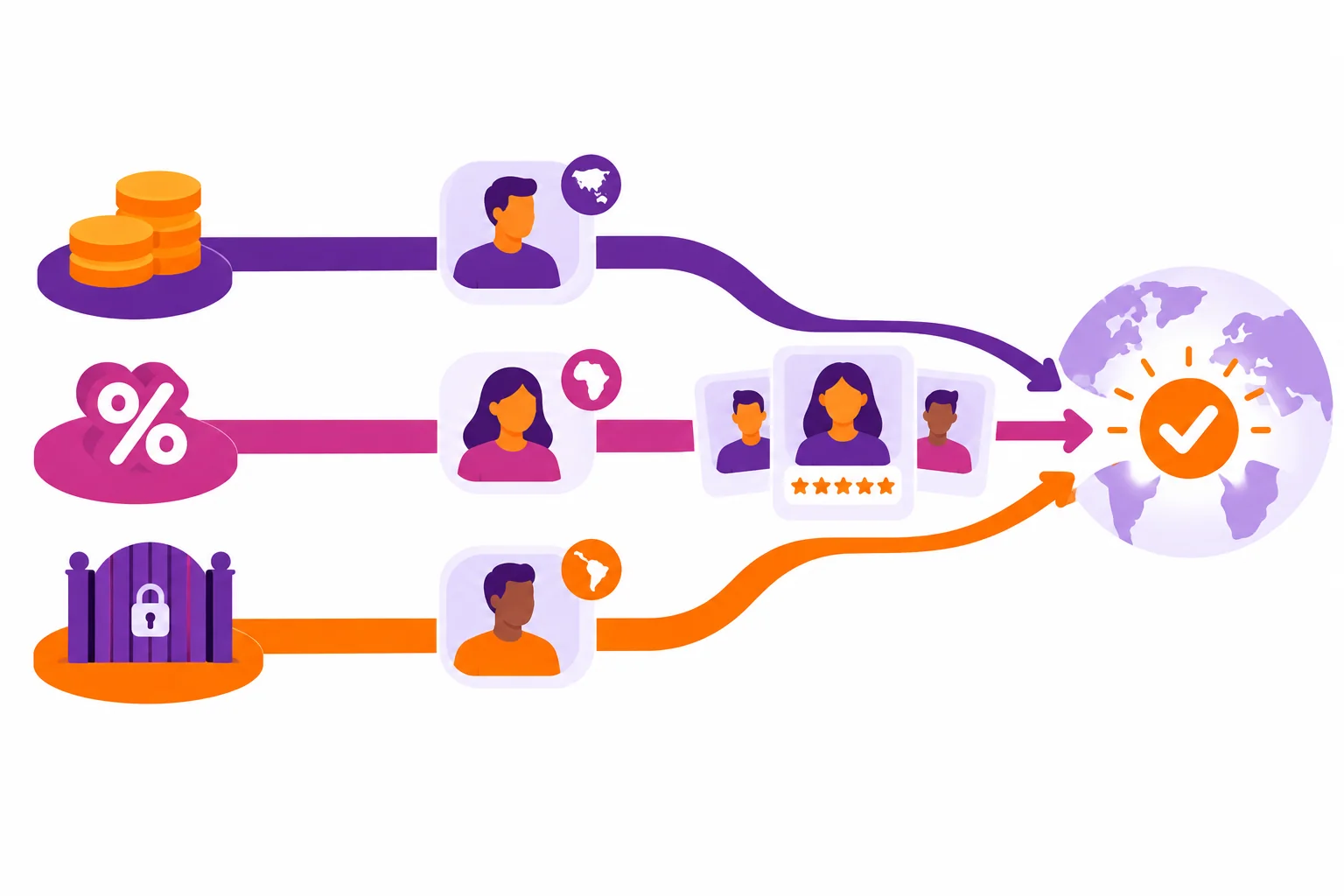
Ugandan agencies typically charge a percentage of the hire's first-year salary on success, with executive search sometimes billed in instalments. Retainers, flat fees and temporary-staff margins also exist. The safest model for an overseas employer is pay-on-hire, where nothing is owed until a candidate accepts and starts.
Local contingency fees are commonly quoted at roughly 8-15% of annual salary, and executive search at roughly 15-25%. Treat these as market ranges to test quotes against, not as a price list. For wider comparisons, see our guide to recruitment agency fees by country.
| Fee model | How it works | Suits | Watch for |
|---|---|---|---|
| Retainer | Part of the fee is paid before the search produces anything | Confidential or very senior searches | You pay even if no hire is made |
| Contingency percentage | A share of first-year pay, due on hire | Most mid-level and specialist roles | Unclear definition of "salary" and replacement period |
| Flat fee | A fixed amount per placement | High-volume, similar roles | Quality can drop if the fee is low |
| Pay-on-hire via CBREX | One contract and one invoice; payment follows the terms in each job's Job Details | Overseas employers hiring in several countries | Terms can vary by job, so read them per role |
On CBREX there are no retainers, seat licences or monthly fees. What an agency earns depends on the location of the hire, so we do not quote one rate for every country. Our explainer on how pay-on-hire recruitment works covers the mechanics.
Ask each agency what "salary" means (base only, or base plus guaranteed bonus), when the fee falls due, and what happens if the hire leaves early. Then set fees by the candidate's years of experience, not by how hard the role feels to fill. Difficulty-based pricing is a common mistake, and it rewards slow searches.
Before signing with an agency in Uganda, confirm its registration and licence status, collect documents at onboarding, ask for references from similar roles, and get the fee trigger, replacement terms and candidate ownership in writing. Treat any request for upfront payment, especially by mobile money, as a reason to walk away.

Uganda's rules are strictest for agencies that place Ugandans in jobs abroad. The ILO's review of Ugandan recruitment regulation notes that the EEMIS portal lists approved and vetted agencies and the overseas jobs they handle. If your role involves moving a Ugandan hire to India or another country, check that the agency appears there.
Licences for agencies placing workers abroad run for two years, so ask for the current expiry date. For purely local hires, ask for the agency's company registration and tax documents. We ask for documentation at the time of onboarding, and you should too.
A strong partner shows a proven record in the Ugandan market. Ask for two or three references for roles at your level, and call them yourself. Ask how long the agency took to first shortlist and whether placed hires stayed. Across our local hires, more than 90% stayed at least 12 months, which is the kind of retention figure you can request from any agency.
The IOM publishes a checklist of provisions for labour recruiter service agreements that employers can use when drafting terms. It is written for migrant-worker recruitment, but the clauses on fees and transparency apply to any cross-border engagement.
Ugandan press reported in April 2026 that the labour ministry revoked the licences of 275 agencies, many accused of charging illegal fees. Scams exist, so verify before you pay anyone. Red flags include:
A simple test works well: call the client companies the agency names, using numbers you found yourself, and ask whether the agency really placed their staff.
The most common mistakes are expecting top-tier talent at below-market pay, ignoring how pay differs between cities and sectors, getting the fixed and variable split wrong, and appointing too many agencies on one role. Each one slows the search and weakens the shortlist.
Treat Uganda as its own market, not as an extension of India or of neighbouring Kenya. If you also hire in the region, compare notes with our guide to a recruitment agency in Kenya. On vendor count, one specialist with a clear brief beats five agencies sending overlapping CVs. Duplicate submissions also waste your team's time.
CBREX routes a Uganda role to vetted local specialist agencies through one platform, one contract and one invoice. Its AI matching engine picks the agencies best suited to the role, three screening stages filter candidates, and the employer pays only when a hire is made.

Here is how a Uganda search runs on CBREX:
Speed is the practical gain. A first shortlist typically arrives within 24 hours, and average time to source on CBREX runs between 4 and 48 hours. If supply for a niche skill thins out, we add specialist agencies to the marketplace on demand, which a standalone vendor system cannot do. Our wider guide to overseas recruitment agencies for Indian companies shows how this works across countries.
If you run a Ugandan recruitment, staffing or executive search firm, or you are a self-employed recruiter, registration is free. Corporates post jobs globally, and you earn a commission on each successful hire. Start with supplier sign-up on CBREX. We do not provide a candidate database or job-board subscriptions, so you bring your own network.
Write the brief first: role, local pay range, fixed and variable split, and the employment structure you plan to use. Then verify two or three agencies against the checks above, or let us do the routing. If you want to see a Uganda role matched on the platform, book a CBREX demo. To see what scattered agency admin is costing you now, calculate your hidden hiring tax.


