Read Time:
Recruitment Agency in China: How to Hire Through Vetted Specialist Agencies (2026)


A recruitment agency in China sources, pre-screens and presents candidates for your open role, and you pay a fee when one of them is hired. For an India-headquartered employer, the practical route is to brief a specialist firm that already places your function in the right Chinese city, agree the fee trigger and replacement terms in writing, and check the agency's registration papers before any role goes out.
We built CBREX for exactly this problem. Instead of signing a separate agreement with each agency in each market, you post a China role once and it is routed to vetted specialist agencies under one contract and one invoice.
Our network has 4,000+ recruiting firms across 55 countries, with no retainers, seat licences or monthly fees. This guide covers what agencies do, how fees work, how long hiring takes and what to check before you sign.
A recruitment agency in China finds candidates through its own networks and direct outreach, screens them against your brief, presents a shortlist and helps manage interviews, offers and joining. A job board only displays your advert. The agency does the searching, the first conversations and the follow-up.
That difference matters most for roles where the best people are not applying. Passive candidates, those already employed and not browsing, respond to a recruiter they trust, not to a posting. A good local specialist also knows which employers in a city pay what, which is hard to see from India.
Three services get mixed up, and mixing them is costly.
Dispatch is also restricted to temporary, auxiliary or substitute roles, and the share of dispatched workers is capped at 10% of a host's workforce. A permanent sales head or engineer belongs in the agency route. Take advice from local employment counsel before using dispatch for anything else.
One more point for Indian employers: an agency finds the person but does not employ them. You still need a way to hire legally in China, such as your own entity or a separate employment arrangement. Our guide on how to hire in China without local entity setup covers that question separately.
Most China agencies charge a percentage of the hire's first-year pay. Commonly quoted market benchmarks are 15-20% for general permanent placement, 18-25% for industry specialists and 25-35% for retained executive search. The exact figure depends on seniority, role scarcity and the agency's terms.
Those ranges are market benchmarks, not CBREX prices, and they vary by city and by how the contract is written. On CBREX, fees depend on the location of the hire and on the candidate's years of experience. Your agreed fee for each role is set before work starts, and the payment terms appear in that job's Job Details section.

| Model | How it is charged | Typical benchmark | Main risk for you |
|---|---|---|---|
| Retained search | Part of the fee paid upfront or in stages, whether or not you hire | 25-35% of first-year pay | You pay before any hire exists |
| Contingency, single agency | Fee only when a candidate is hired | 15-25% of first-year pay | One firm's reach limits the search, and each market needs its own contract |
| Pay-on-hire marketplace (CBREX) | Fee only when a hire is made, under one contract and one invoice | Set by hire location and years of experience | You must write a clear brief so the right agencies engage |
To compare offers fairly, convert every quote to a rupee or yuan cost per hire on the same base: first-year fixed pay, or fixed plus variable. Ask whether bonus, allowances or sign-on payments count in the fee base. That single clause can move a fee by several points.
The most common fee mistake we see is setting the fee according to how difficult a hire seems. Difficulty is subjective and every agency will call your role hard. Years of experience is a cleaner yardstick, and it lines up with how pay, and so the fee base, actually scales.
For a wider view of how fees differ across markets, see our guide to recruitment agency fees by country, and our post on retainer versus pay-on-hire pricing.
Expect first candidates within days and a completed hire in roughly one to two months. On CBREX, a role typically receives its first shortlist within 24 hours of posting, and time to hire for an India-based role runs 15-45 days. We do not publish a separate China-only average, so treat these as platform figures.
Some more detail on the speed we see across the platform:
Before one client consolidated its agencies into a single CBREX contract, its time to hire was 60-75 days. That client had been running 54 separate agency contracts, which shows how much delay comes from administration and not from the market.
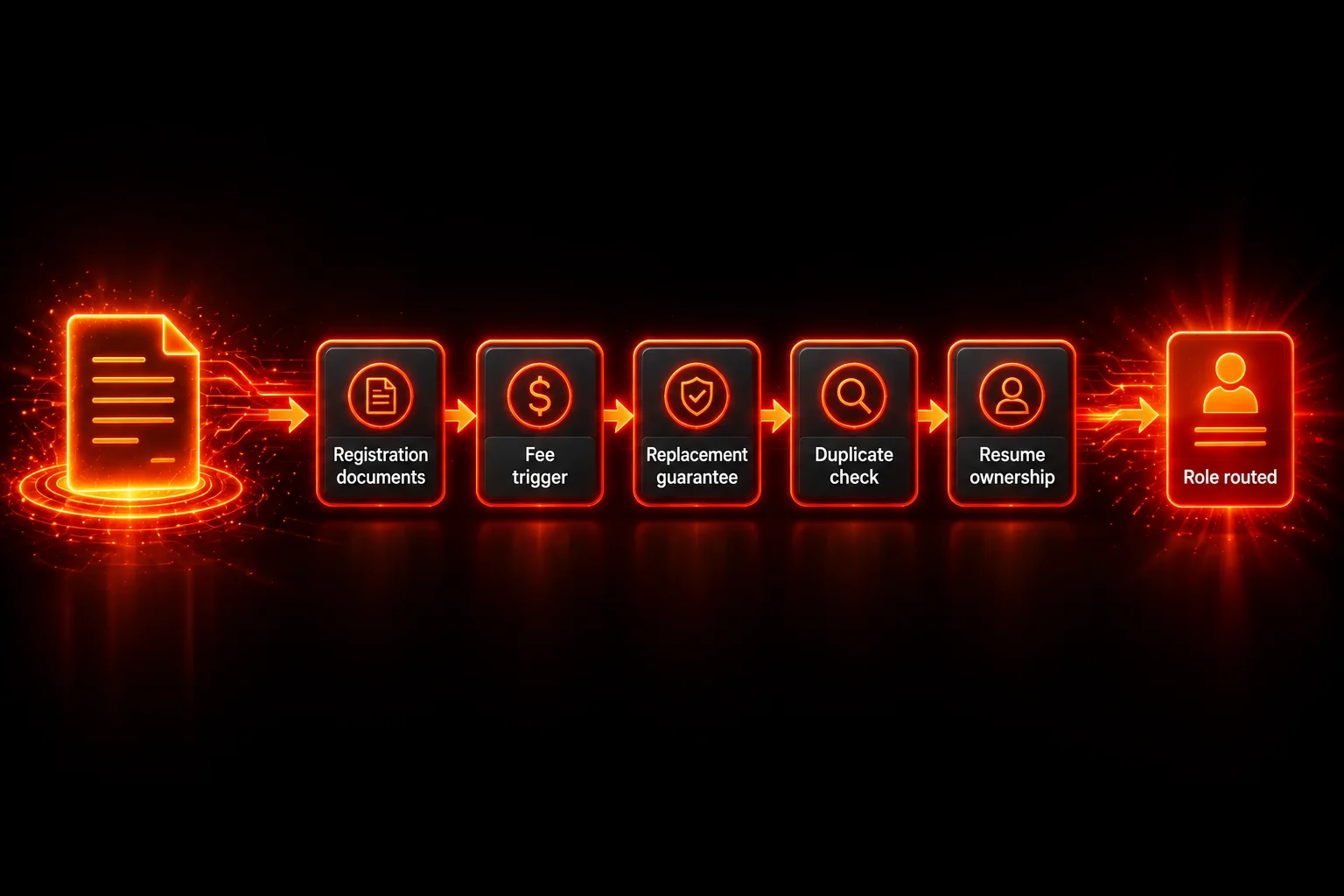
Before signing, check the agency's registration documents, the fee trigger, the replacement guarantee, who owns each candidate submission and how duplicates are handled. Also confirm the firm genuinely places your function. Put every answer in the contract, not in an email thread.
For confidential leadership searches, we map only boutique search firms whose owners are industry veterans with more than two decades of experience. They know how to stay discreet and they carry the industry networks.
You sign one contract with CBREX and receive one invoice, however many agencies work on the role. We route your China requirement to the most relevant specialist agencies, every candidate passes three screening levels, and you pay only when a hire is made.
The steps in practice:

If an agency pool runs thin, we add specialist agencies to the marketplace on demand, so supply does not stall. A standalone vendor management system does not do that. It also helps if China is one of several markets, because the same contract covers the rest. Our Hong Kong guide and our UAE guide show the same model in two other markets.
Retention matters as much as speed. More than 90% of our local hires stayed at least 12 months. We have filled roles across the US, Europe, APAC and India, and our platform has hired critical roles in China as well as Japan.
China is not one hiring market, and the brief should say so. Salary levels and the candidate catchment differ sharply between cities, so a single national pay band will mislead agencies. Indian founders also often get the fixed-versus-variable split wrong, especially for sales roles.
A strong brief includes:
Plan your timeline around the market too. Good briefs get shortlists within a day or two, so make sure your interviewers are available in the same week.
If you are weighing agencies for a China role, start by sizing what slow, fragmented hiring costs you today. You can calculate your Hidden Hiring Tax to see the overhead of running several agency relationships.
When you are ready to route a real role, book a demo and we will walk through how a China requirement is matched, screened and ranked on a single contract. Questions before that? Let's talk.
Run a recruiting firm in China or elsewhere? Corporates post jobs globally on CBREX, recruiters fill them and earn a commission on each successful hire, and registration is free. Sign up as a recruiting firm to see open roles you can work on.


