Read Time:
18 Mins
Hiring Models India: In-House vs. Job Boards vs. Agencies vs. AI


Your TA team has four open roles in Bengaluru, two in Singapore, and one in Germany. The hiring manager wants shortlists in three weeks. Your CFO wants to know what it's going to cost. And your existing agency panel — six vendors, six contracts, six invoicing cycles — has already sent you 22 CVs across the seven roles, none of which have made it past the first screen. Sound familiar?
This is the reality for most mid-market and enterprise companies in India right now. The question isn't whether to hire. It's how to hire — and which of the four main hiring models in India will actually deliver the talent you need, at the speed you need it, without blowing your recruitment budget. This comparison breaks down each model across the dimensions that matter most to TA and HR leaders: cost, speed, quality of hire, geographic reach, and scalability.
In 2026, Indian companies have more recruitment options than ever, and more confusion about which one to use. The four dominant hiring models in India are: internal TA teams, job boards (like Naukri and LinkedIn), traditional recruitment agencies, and AI-powered talent marketplaces. Each has a distinct operating model, cost structure, and ideal use case. Most companies use a combination, but few have a deliberate strategy for which model to deploy when.
This guide is built for TA heads, HR managers, and CHROs at mid-market and enterprise Indian companies, especially those hiring across multiple geographies or filling specialist roles where the standard playbook keeps failing. If you're trying to decide where to invest your recruitment budget in 2026, this is the comparison you need.
The in-house model is the default for most companies above a certain size. You hire a team of internal recruiters, give them an ATS, subscribe to a few job boards, and task them with filling every open role across the business.
Internal TA teams own the full recruitment cycle: writing job descriptions, sourcing candidates, screening applications, coordinating interviews, and managing offers. They work directly with hiring managers and carry institutional knowledge about the company's culture and requirements.
The cost is largely fixed. You're paying recruiter salaries, ATS licence fees, job board subscriptions, and LinkedIn Recruiter seats. For a team of five recruiters in India, you're typically looking at a fully-loaded annual cost of ₹80 lakh to ₹1.5 crore, before any external agency spend. The true cost per hire is often higher than TA leaders realise once you factor in time-to-fill and hiring manager hours.
In-house teams are fast at roles they've filled before. Repeatable, high-volume positions in a single geography are where they shine. But niche roles, senior hires, and cross-border mandates expose the limits quickly. Most internal teams don't have the specialist networks or local market knowledge to source a Regulatory Affairs Manager in Germany or a Fintech Compliance Lead in Singapore. Geographic reach is the biggest structural gap.
Scaling an in-house team takes time. Hiring more recruiters, onboarding them, and building new agency relationships doesn't happen in weeks. When hiring volumes spike, a new product launch, a GCC expansion, a market entry, the in-house model struggles to flex fast enough.
Job boards are the most widely used supplementary tool in Indian recruitment. Naukri alone claims over 90 million registered job seekers. LinkedIn adds another layer of professional visibility. For many TA teams, posting a role on a job board is the first instinct, and sometimes the only action taken.
You post a job description. Candidates apply. Your team screens the applications, shortlists, and moves qualified candidates into the interview process. Simple in theory. Chaotic in practice, especially at scale.
Job board costs are relatively low upfront, annual subscriptions or pay-per-post models. But the hidden cost is the screening burden. A single mid-level role on Naukri can generate 300 to 500 applications. Screening those applications consumes recruiter hours that could be spent on higher-value work. The AI resume screening tools that have emerged to address this problem help, but they add another layer of cost and complexity.
Job boards are fast to post but slow to convert. The candidate pool is entirely active job seekers, people who are already looking. This is a fundamental limitation. The best candidates for most specialist or senior roles are not actively applying to job boards. They're employed, performing well, and not refreshing their Naukri profile. Job boards also have limited reach for international roles. If you're hiring outside India, Naukri's database offers almost no value.
There's also a quality problem that has worsened in 2026: AI-generated CVs. Candidates are using AI tools to tailor their resumes to job descriptions, making it harder to distinguish genuinely qualified applicants from well-optimised ones. The signal-to-noise ratio on job boards has dropped significantly.
Posting more roles is easy. Screening more applications is not. Job boards scale the inbound volume, but they don't scale the quality of that volume. The more roles you post, the more screening work lands on your team.
When a role is too specialist for a job board and too important to leave to chance, most TA leaders turn to a recruitment agency. This is the model that has dominated specialist and senior hiring in India for decades, and it still delivers real value in the right circumstances.
You brief an agency on a role. They source candidates from their network, screen them, and present a shortlist. You interview, select, and hire. The agency earns a fee, typically 12% to 20% of the candidate's first-year salary, when the hire is made. For leadership roles, some agencies charge a retainer upfront, regardless of outcome. For a detailed breakdown of what these fees actually add up to, see our guide on recruitment agency cost in India.
Agency fees are significant. A 15% fee on a ₹25 lakh annual salary is ₹3.75 lakh per hire. Multiply that across 20 hires in a year and you're looking at ₹75 lakh in agency fees alone, before retainers, replacement guarantees, or the admin cost of managing multiple vendor relationships. The recruitment agency cost is often the largest single line item in a TA budget.
A good specialist agency, one that genuinely knows its niche, can deliver a strong shortlist faster than any job board. They have relationships with passive candidates who aren't visible on any platform. This is the core value proposition of the agency model: access to talent that isn't actively looking.
But quality is inconsistent. A generalist agency briefed on a specialist role will often resort to job board scraping, presenting the same active candidates you'd find yourself. The difference between a great agency and a mediocre one is enormous, and it's not always obvious upfront. Our guide on how to choose a recruitment agency covers the criteria and red flags in detail.
Geographic reach is the other structural problem. A strong agency in Mumbai may have no meaningful network in Kuala Lumpur or Warsaw. As Indian companies expand globally, the single-agency model breaks down. You end up briefing different agencies for different geographies, which creates the vendor sprawl problem.
More roles means more agencies. More agencies means more contracts, more invoices, more relationship management, more inconsistency. This is the defining operational challenge of the agency model at scale. Companies that have been hiring through agencies for several years often find themselves managing 15 to 25 vendor relationships, each with different terms, different quality standards, and different communication styles. Vendor consolidation becomes a strategic priority, not just an administrative one.

The fourth model is the newest, and the one that's changing the calculus for Indian companies with complex hiring needs. AI-powered talent marketplaces don't replace agencies or internal teams. They orchestrate them, adding an intelligence layer that routes roles to the right specialists, screens candidates before they reach your desk, and consolidates everything under a single contract.
You post a role on the platform. The AI matches your requirement to the most relevant specialist agencies from a curated network. Those agencies source and pre-screen candidates. The platform's AI then validates and stack-ranks the shortlist before it reaches your hiring manager. You interview pre-vetted candidates. You pay only when you hire.
CBREX is the leading example of this model for Indian companies. Its C Map AI routes each role to the most qualified agencies from a network of 4,000+ specialist recruiting firms across 33 countries. Its C Screen AI, trained on 250,000+ anonymised resumes across 570+ job categories, validates every candidate before they reach your team. The result is a 3-level screening process: agency pre-screen, AI validation, and stack ranking. Hiring managers see only interview-ready candidates.
This is where the AI marketplace model fundamentally changes the economics of hiring models in India. There are no retainers. No seat licences. No upfront fees. You pay only when a hire is made, the same contingency model as a traditional agency, but with the reach of 4,000+ agencies and the quality control of AI screening built in. For companies that have been paying retainers to executive search firms or managing bloated agency panels, the cost reduction is significant.
AI matching eliminates the lag between briefing and sourcing. Instead of waiting for a single agency to activate its network, the platform simultaneously routes your role to multiple specialist agencies with proven track records in that specific skill set and geography. Candidates arrive pre-screened and stack-ranked. Time-to-shortlist drops. Hiring manager time is protected.
Quality is structurally higher because the model combines human specialist knowledge (the agencies) with AI validation (C Screen). Neither alone is sufficient. AI-only platforms recycle active job seekers and can't reach passive talent. Human-only agencies are inconsistent and hard to manage at scale. The combination delivers both reach and quality control.
This is where the AI marketplace model has the clearest advantage over every other option. A single contract with CBREX gives you access to specialist agencies in 33 countries, covering North America, LATAM, MENA, SEA, EMEA, APAC, Eastern Europe, Western Europe, the UK, China, Japan, and Oceania. For Indian companies expanding globally, this is the difference between managing 20 agency relationships across 10 countries and managing one.
Scalability is built in. Post one role or 100, the platform handles the routing, screening, and coordination without adding headcount to your TA team. The AI-powered RPO model that CBREX offers takes this further, providing end-to-end outsourced hiring with AI-driven vendor coordination for companies that want to fully offload the process.
Here's how the four hiring models in India stack up across the dimensions that matter most to TA and HR leaders in 2026:
| Dimension | In-House TA | Job Boards | Agencies | AI Marketplace |
|---|---|---|---|---|
| Upfront Cost | High (fixed salaries) | Low | Medium, High | None |
| Cost Per Hire | Variable | Low, Medium | 12-20% of salary | Pay-on-hire only |
| Time to Shortlist | Slow, Medium | Fast (post) / Slow (screen) | Medium | Fast |
| Passive Talent Access | Limited | None | High (specialist agencies) | High (4,000+ agencies) |
| Quality Control | Team-dependent | Low | Inconsistent | Structured (3-level screen) |
| Geographic Reach | Limited | India-focused | Single-market | 33 countries |
| Scalability | Low | Medium | Low (vendor sprawl) | High |
| Admin Overhead | High | Medium | Very High | Low (single contract) |
| Niche Role Capability | Low | Very Low | High (right agency) | Very High |
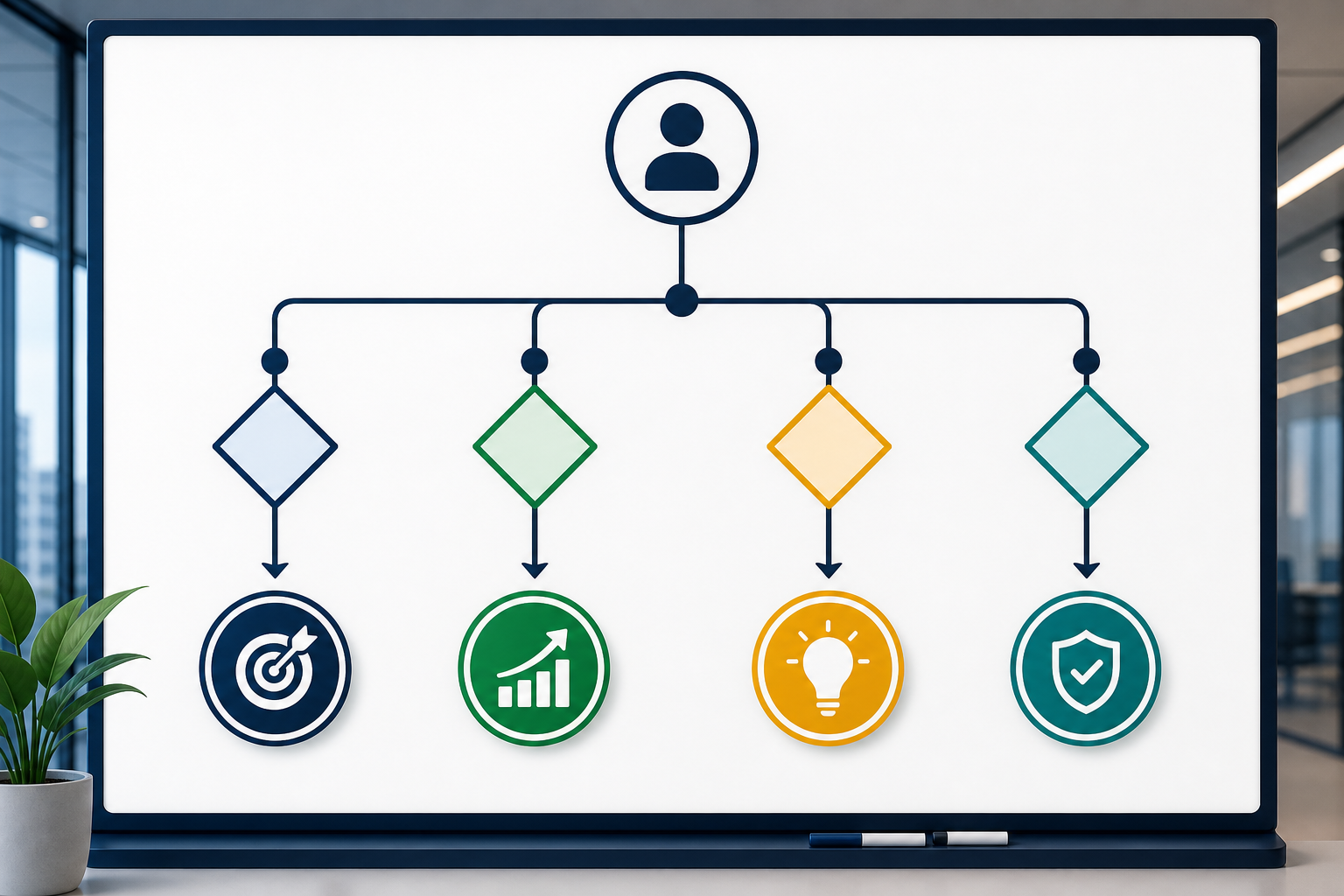
The honest answer is: it depends on your role type, geography, and growth stage. But "it depends" isn't a strategy. Here's a practical decision framework for matching hiring models in India to your specific situation.
If you're filling 50+ roles per year in a single Indian city, mostly at entry-to-mid level, the combination of an in-house TA team and job board subscriptions is cost-effective and manageable. The volume justifies the fixed cost of internal recruiters, and the roles are broad enough that job boards generate sufficient candidate pools. Add an AI screening tool to manage application volume.
For roles that require specific technical expertise, domain knowledge, or seniority, think a Head of Regulatory Affairs, a Principal Data Scientist, or a CFO, job boards won't cut it. You need access to passive talent. A specialist recruitment agency is the right tool here, provided you choose one with genuine depth in that niche. Use the criteria in our recruitment agency selection guide to avoid the common pitfalls.
This is where the traditional models break down fastest. If you're an India-HQ company hiring in Singapore, Germany, the UAE, and the Philippines simultaneously, you cannot manage that through separate agency relationships in each market. The operational complexity is too high, the quality is too inconsistent, and the cost of vendor sprawl is too significant. An AI-powered talent marketplace like CBREX is the only model that gives you specialist agency access across all those markets through a single contract and a single point of accountability. For a deeper look at the global hiring challenge, see our complete guide to global hiring from India.
If your TA team is managing more than 10 agency relationships, you have a vendor sprawl problem, even if you haven't named it yet. The symptoms are familiar: duplicate CVs, inconsistent quality, separate invoicing cycles, and no single view of recruitment performance. The solution is consolidation. An AI marketplace that routes roles to the right specialist agencies, manages the relationships, and provides unified reporting replaces the chaos with a single operating model. This is one of the most common reasons Indian mid-market companies move to the marketplace model.
Most mature TA functions use a combination of models. In-house teams handle high-volume domestic roles. Job boards supplement sourcing for broad skill sets. An AI marketplace handles specialist, senior, and cross-border mandates. The key is being deliberate about which model you deploy for which role type, rather than defaulting to the same approach for every hire. For companies evaluating whether an RPO layer makes sense on top of this, the RPO vs staffing comparison is worth reading alongside this guide.
CBREX is not a job board. It's not a single recruitment agency. It's not a traditional RPO. It's the fourth model, an AI-powered talent marketplace that combines the specialist depth of 4,000+ curated recruiting firms with the quality control of AI screening and the operational simplicity of a single contract.
For Indian companies, the practical implications are significant. You get access to specialist agencies in 33 countries without managing 33 separate relationships. You get pre-screened, stack-ranked candidates without adding screening headcount. You pay only when a hire is made, no retainers, no seat licences, no upfront commitments. And the platform integrates with your existing ATS, so it fits into your current TA stack rather than replacing it.
The companies that benefit most from CBREX are those that recognise the limits of their current hiring models in India: India-HQ companies expanding into new geographies, GCCs with multi-function hiring needs, mid-market companies with niche skill requirements, and enterprises that have accumulated too many agency relationships to manage effectively. If any of those descriptions fit your situation, the platform is worth a closer look.
"Your best hire isn't looking. AI finds them. Humans close them.", CBREX
CBREX's AI tools go beyond matching. C Screen, trained on 250,000+ anonymised resumes across 570+ job categories, validates every candidate before they reach your hiring manager, with 98% accuracy. C Map routes each role to the agencies with the deepest relevant expertise. C Source provides market intelligence and candidate discovery. And for companies that want full process outsourcing, CBREX's AI-powered RPO model handles end-to-end hiring with AI-driven vendor coordination.
If you're evaluating your current recruitment setup and want to understand what a consolidated, AI-powered approach would look like for your specific hiring needs, book a demo with the CBREX team. You'll see exactly how the platform routes your roles, screens candidates, and delivers shortlists, without any upfront commitment.
Alternatively, if you're ready to post your first role and see the network in action, you can sign up directly and get started today.
It depends on the role type. For high-volume, entry-level domestic roles, in-house teams combined with job boards offer the lowest cost per hire. For specialist, senior, or cross-border roles, an AI talent marketplace with a pay-on-hire model is typically more cost-effective than retainer-based agencies, because you only pay for successful outcomes, and the AI screening reduces the time your internal team spends on unqualified candidates.
Yes, and most mature TA functions do. The most effective approach is to match the model to the role type. Use in-house teams and job boards for volume hiring. Use specialist agencies or an AI marketplace for niche and senior roles. Use an AI marketplace for all cross-border mandates. The key is having a deliberate framework rather than defaulting to the same model for every hire.
AI-powered talent marketplaces have a clear structural advantage for global hiring. A single contract gives you access to specialist agencies across multiple countries, with AI matching ensuring the right agency handles each role. Traditional agencies are typically limited to one or two markets. Job boards have minimal reach outside India. In-house teams rarely have the international networks needed for specialist cross-border roles. For a detailed breakdown, see our global hiring from India guide.
The difference is fundamental. Job boards are passive databases of active job seekers, candidates who have chosen to make themselves visible. AI talent marketplaces access passive talent through specialist agencies, reaching candidates who are currently employed and not actively looking. Job boards put the screening burden on your team. AI marketplaces deliver pre-screened, stack-ranked shortlists. Job boards are India-focused. AI marketplaces like CBREX operate across 33 countries. The two models serve different purposes and should not be treated as alternatives to each other.
Vendor sprawl is what happens when a TA function accumulates too many agency relationships over time, typically 10 to 25 separate vendors, each with different contracts, fee structures, quality standards, and communication styles. It creates administrative chaos, inconsistent candidate quality, and no single view of recruitment performance. The most effective fix is consolidation through an AI talent marketplace, which replaces multiple agency relationships with a single contract while maintaining access to specialist expertise across all the markets you hire in. For a detailed breakdown of the consolidation process, see our guide on vendor consolidation in recruitment.
Yes. CBREX's leadership hiring capability connects companies with curated boutique firms and independent search consultants who specialise in C-suite and VP-level mandates, without the retainer fees that traditional executive search firms charge. The pay-on-hire model applies at every seniority level. For more on this, see our leadership hiring India guide.
The right hiring models in India for your company in 2026 won't be the same as the right model for your competitor, or even the same as the right model for every role you're trying to fill. What matters is having a clear framework for matching model to mandate, and the operational infrastructure to execute without creating more complexity than you solve. If your current approach is generating vendor sprawl, slow time-to-fill, or inconsistent candidate quality on specialist and cross-border roles, the AI marketplace model deserves a serious look. Book a demo with CBREX to see how the platform handles your specific hiring challenges, no retainer, no commitment, just results.


