Read Time:
3 Mins
Why 'Ghosting' is a Data Problem: Solving Reliability in the Indian Tech Talent Market


For years, Indian recruiters relied on "warm calls" and "gut feel" to gauge if a candidate would actually show up. In 2026, those methods will be obsolete. Ghosting is no longer a personality trait; it is a predictable data point. If a candidate is "ghosting" you, your data pipeline failed to flag the "Lack of Intent" signals early in the funnel.
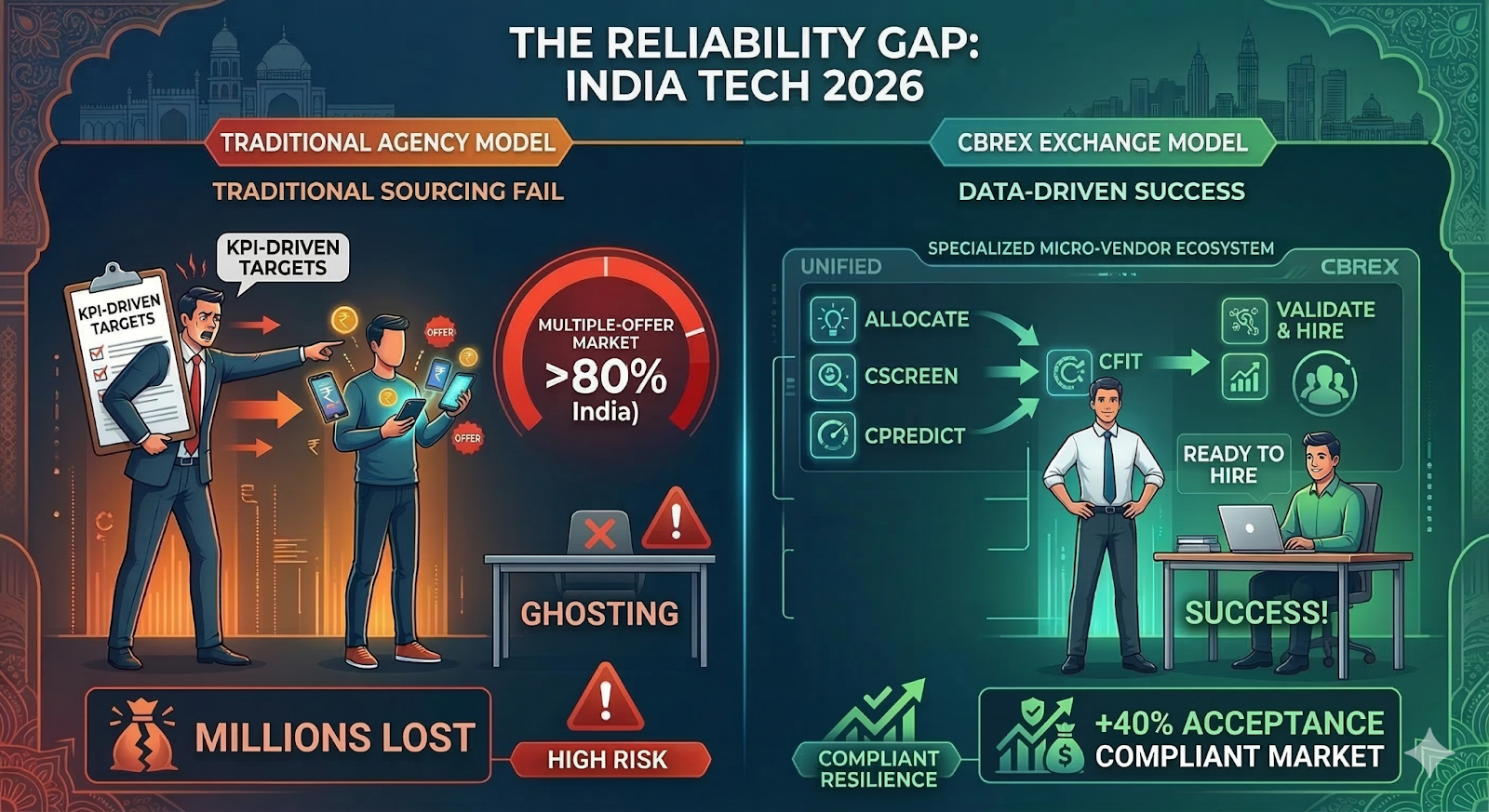
In the current market, a Senior DevOps Engineer doesn't just look for a job; they look for the highest bidder. Specifically for roles like Kubernetes Architects or Cloud-Native Developers, where the 'Multiple-Offer' rate is over 80% in the Indian market.Traditional agencies often "push" these candidates to interview just to meet their KPIs, ignoring the fact that the candidate is already in the final stages with three other firms. This creates a "Reliability Gap" that costs Indian firms millions in lost productivity and project delays.
A high-growth AI-SaaS firm was attempting to scale its data engineering team by 100 members in six months. Despite their "Tier 1" status, they faced a staggering 42% ghosting rate at the onboarding stage. Their generalist vendors were hitting sourcing targets, but the "Quality of Intent" was near zero.
The Pivot to the Exchange Model:
The firm moved away from high-volume generalist agencies and transitioned to a Recruitment Exchange. Instead of just "sourcing," the requirements were matched to vendors who specialized in "High-Intent Technical Sourcing."
By integrating predictive scoring into the workflow, the firm could see a "Reliability Score" for every candidate before the first technical round. Candidates with high "Offer-Hoarding" probability (flagged by inconsistencies in their engagement data) were deprioritized.
The Result: The ghosting rate plummeted from 42% to 12% within four months, saving the firm an estimated $450,000 in redundant interviewing and onboarding costs.
To solve ghosting, recruiters must stop looking at resumes and start looking at behavioral data.

In the Indian market, the only way to beat ghosting is to have a "vetted" supply chain. This is where the CBREX model changes the game.
When a requirement is posted on the CBREX exchange, it is allocated to a vendor who isn't just "finding" a candidate, but is utilizing a suite of intent-validation tools. By the time a candidate reaches your dashboard, they have been processed through CSCREEN to ensure their skills are real and CPREDICT to ensure their intent is high.
CBREX acts as the quality-control layer for the Indian tech market, ensuring that "The Death of the Generalist Agency" also means the death of the "Day 1 No-Show."