Read Time:
3 MINS
What Recruiters Do With the Time AI Gives Them Back
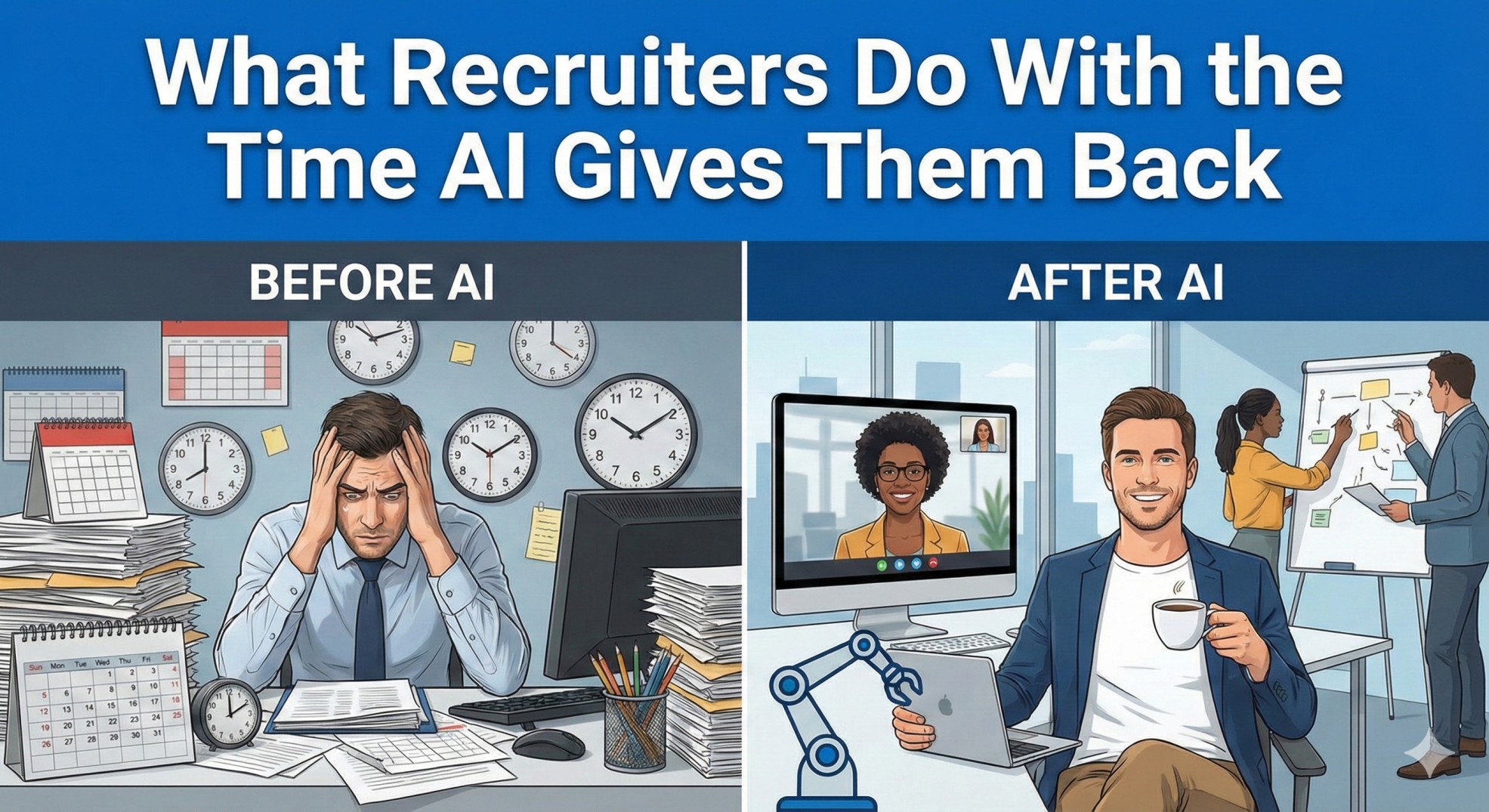

A few years ago, a large global employer hiring thousands of early-career professionals every year faced a familiar problem: recruiter burnout. Applications were pouring in, timelines were tight, and most recruiter hours were being spent on screening resumes and coordinating interviews.
To address this, the organization introduced AI-driven screening and assessment tools across the early stages of hiring. The impact wasn’t subtle. Resume review time dropped drastically, interview scheduling became automated, and recruiters suddenly had something they hadn’t experienced in a long time — uninterrupted time to think.
That shift changed how recruiters worked.
Across the recruitment industry, AI is now handling tasks that were never meant to require human judgment in the first place.
Recruiters are using AI to:
When these steps are automated, recruiters aren’t working less — they’re working better.
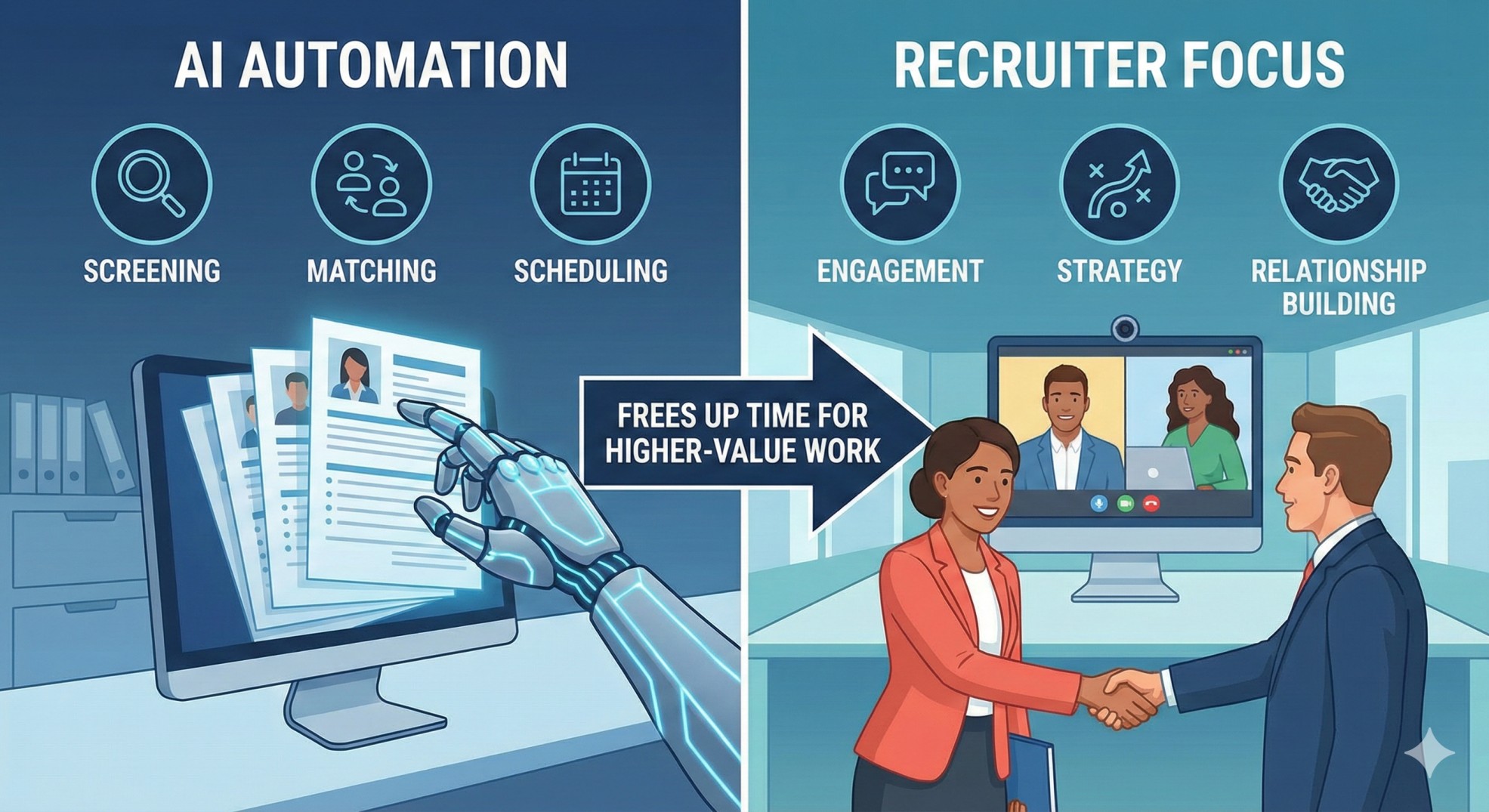
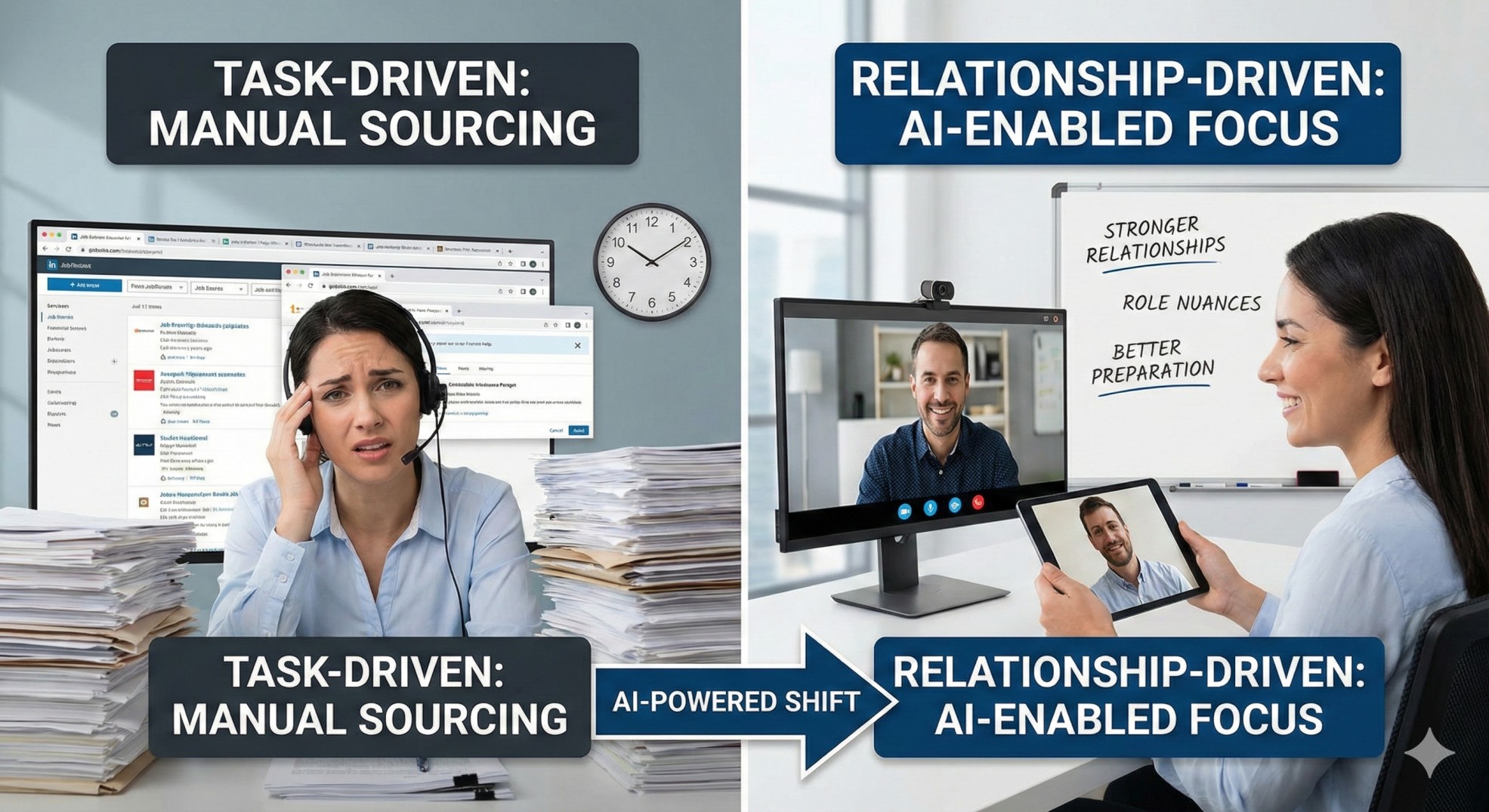
In another example, a fast-growing technology company hiring across multiple geographies introduced AI-based talent matching to support its recruitment team. Instead of manually sourcing profiles for every role, recruiters received shortlists curated by skill relevance and past hiring success.
With sourcing time reduced, recruiters redirected their focus to:
The result was not just faster hiring, but better alignment between recruiters, candidates, and business teams.
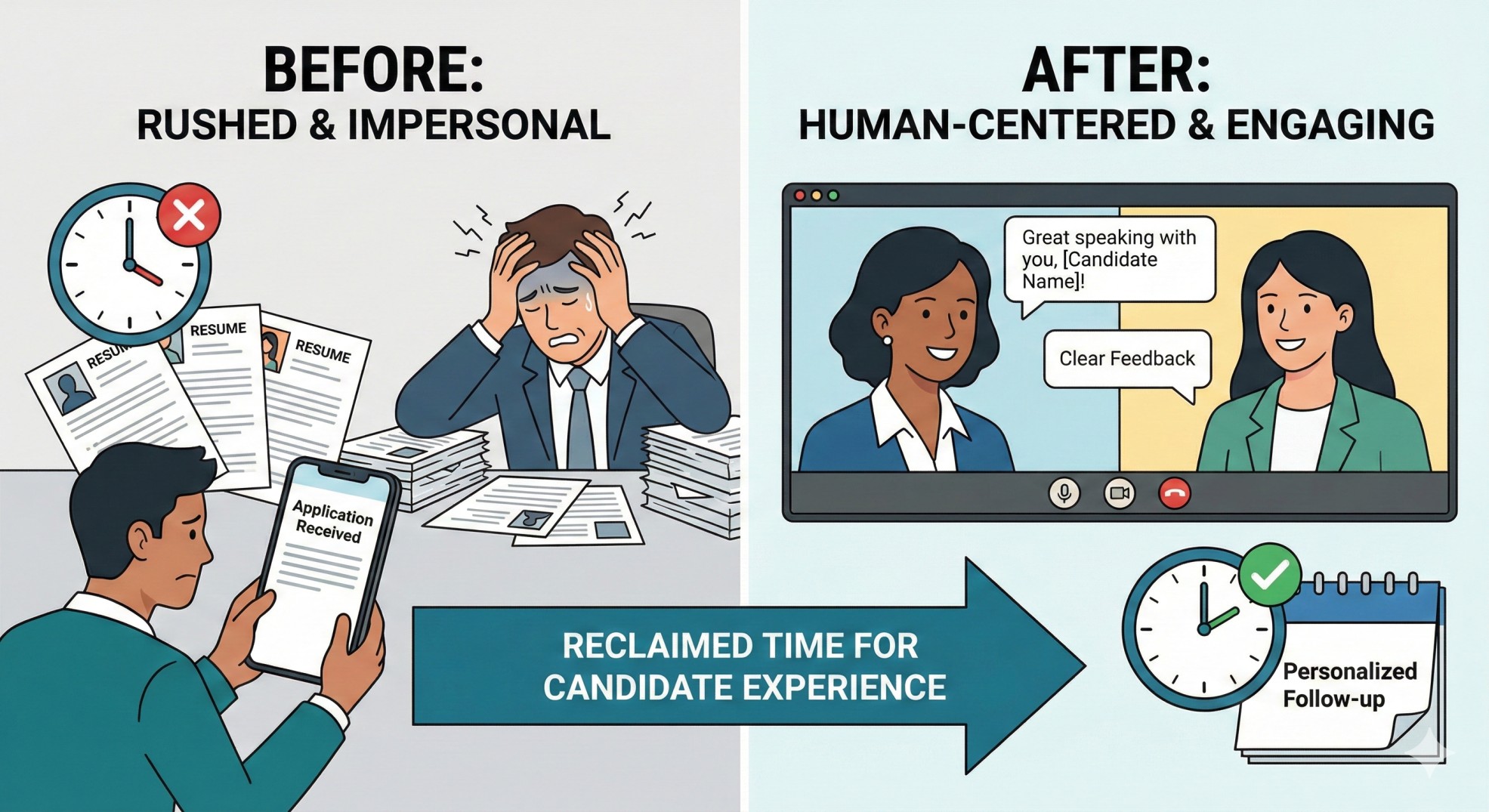
Candidate experience is often the first casualty of high-volume hiring. Delayed responses, generic communication, and rushed conversations can damage employer reputation.
Several recruitment teams now use the time saved by AI to:
These small changes significantly improve candidate trust — something automation alone can’t deliver.
For many recruiters, the biggest benefit of AI is the ability to think beyond the immediate vacancy.
With administrative work reduced, recruiters are investing time in:
This shift elevates the recruiter’s role from executor to advisor.
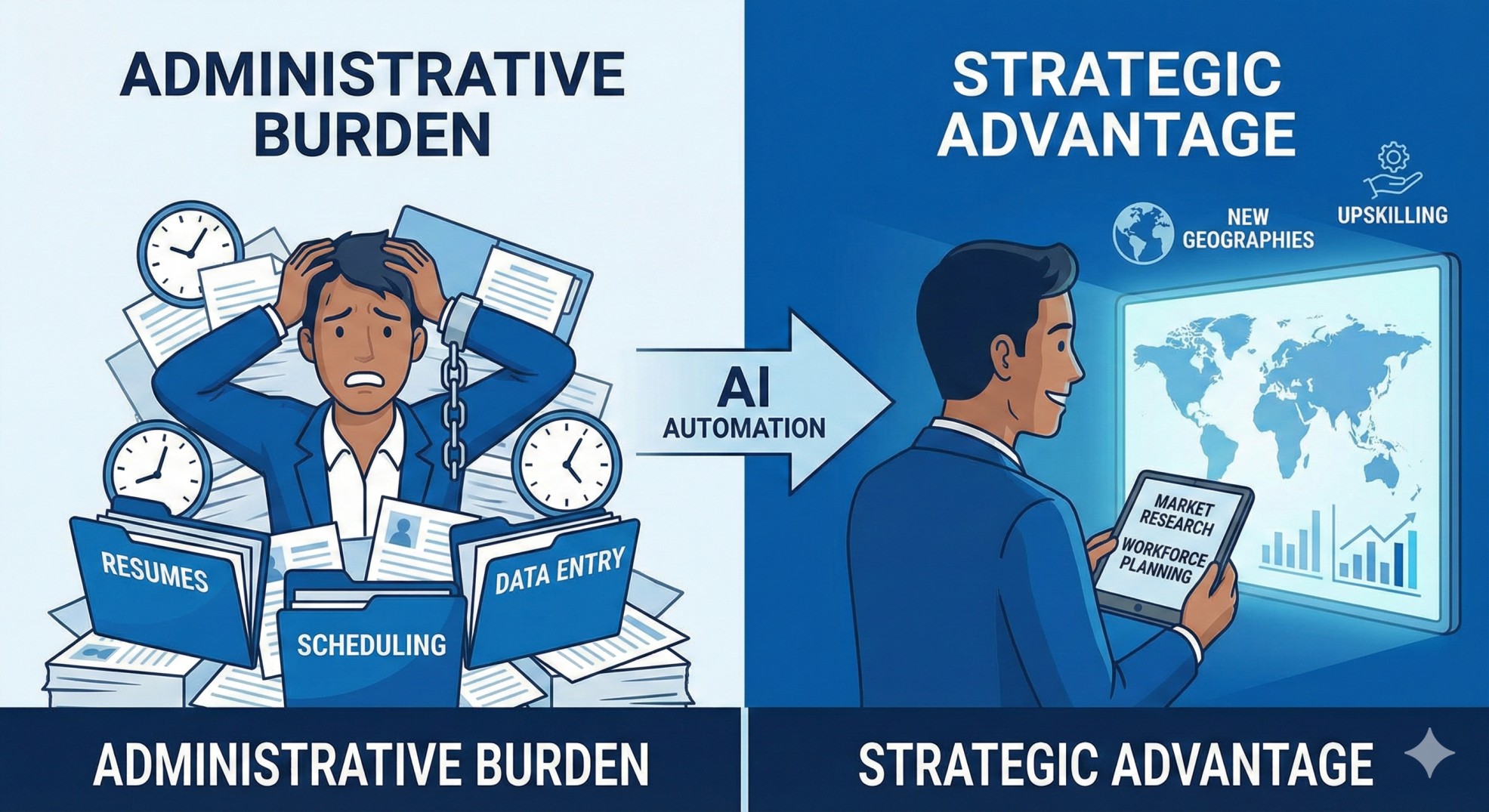
As recruiters begin to work differently — spending less time on manual tasks and more time on relationships and strategy — the role of technology is also shifting.
CBREX has been shaped around this way of working. It applies AI where it meaningfully reduces effort, such as screening, matching, and managing global hiring workflows, while leaving space for recruiters to exercise judgment and build connections.
Rather than trying to redefine how recruiters operate, the focus is on supporting this transition quietly — helping recruiters move from operational overload to more thoughtful, intentional work.
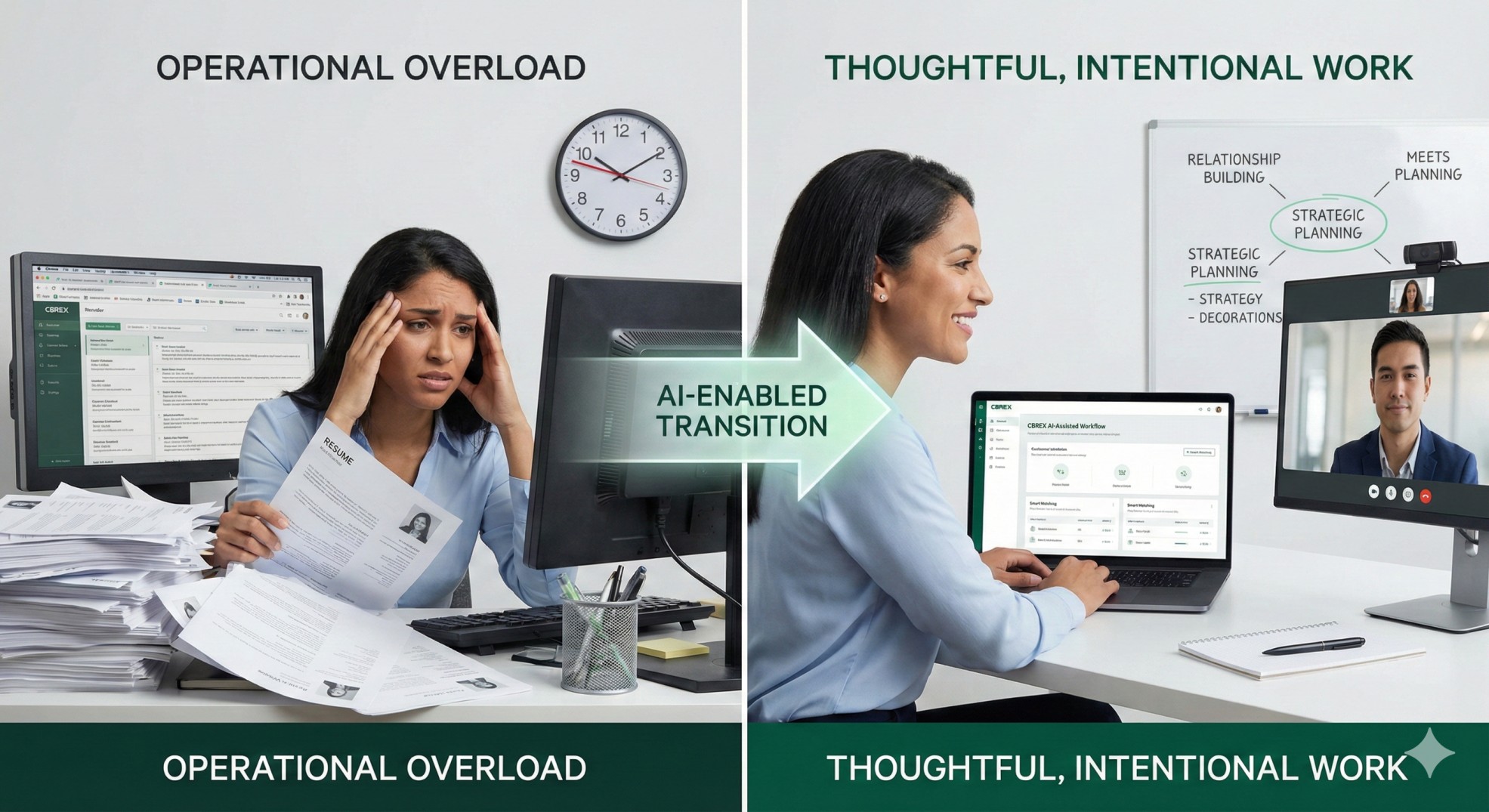
AI doesn’t just make recruitment faster. It makes it more intentional.
When recruiters are freed from repetitive tasks, they gain the capacity to focus on relationships, judgment, and long-term value. And that’s where the real power of AI in recruitment lies.


