Read Time:
13 Mins
Recruitment Marketplace vs Job Boards in India: 2026


Ask a TA leader at an Indian mid-market company what their biggest hiring frustration is, and the answer rarely involves the job board itself. It involves what happens after the post goes live: a flood of applications from candidates who are actively looking but not quite right, a handful of genuinely strong profiles buried somewhere in the pile, and a specialist role that has now been open for eleven weeks.
That gap — between the candidates a job board surfaces and the candidates a company actually needs — is where the recruitment marketplace vs job boards debate becomes a real business decision. For TA leaders in India managing mid-market or enterprise hiring in 2026, the choice between these two models affects candidate quality, time-to-fill, cost-per-hire, and the operational load on your team. This comparison breaks down each dimension so you can decide which model fits your hiring goals.
Job boards, Naukri, LinkedIn Jobs, Indeed India, Shine, are built around one fundamental mechanic: candidates come to them. That means every profile you access belongs to someone who is actively looking for a new role right now. That pool is real and large, but it represents roughly 20-30% of the total talent market at any given time.
The other 70-80% are passive candidates: people who are employed, performing well, and not browsing job listings. They are often the strongest performers in their domain. They do not apply to job posts. They respond to a well-timed, well-targeted approach from a recruiter who understands their field.
A recruitment marketplace operates on a different mechanic entirely. Instead of waiting for candidates to come to a platform, it routes your job requirement to specialist recruiting agencies, firms that have spent years building relationships with passive talent in specific domains, industries, and geographies. The marketplace does not replace human recruiters; it organises and amplifies them through AI matching, so the right specialist agency gets your role, not a generalist who happens to be on your vendor list.
This distinction matters most for roles where the best candidates are not actively looking: senior engineers, regulatory affairs specialists, niche manufacturing leads, cross-border finance professionals, and leadership hires. For those roles, a job board is not a slow version of a recruitment marketplace, it is a fundamentally different tool reaching a fundamentally different population.
The comparison below covers the six dimensions that TA leaders at Indian mid-market and enterprise companies consistently flag when evaluating their sourcing model. Each dimension tells a different part of the story.
Job boards generate volume. For high-volume, well-defined roles, graduate intake, BPO hiring, entry-level sales, that volume is useful. The challenge arrives when the role requires specific domain expertise, seniority, or a combination of skills that narrows the qualified pool significantly.
At that point, the active-seeker database becomes a liability. You receive applications from candidates who match keywords but not context. Screening time rises. Hiring manager confidence drops. And the role stays open longer than it should.
AI-only sourcing platforms compound the problem. They are faster at searching the same active-seeker databases, but speed does not change who is in the pool. AI resume screening tools can improve shortlist quality once candidates are in the funnel, but they cannot source candidates who were never in the funnel to begin with.
A recruitment marketplace addresses this at the sourcing layer. Specialist agencies bring candidates who were not looking, people approached directly because a recruiter in their domain knows their work, their career trajectory, and the right moment to make contact. CBREX's three-level screening process (agency pre-screen, C Screen AI validation, and stack ranking) then ensures that only genuinely qualified profiles reach the hiring manager, not just whoever applied first.
Job boards are fast to post and slow to convert for specialist roles. Posting takes minutes. But converting an application into a hire, screening, shortlisting, interviewing, offering, takes weeks, especially when the initial applicant quality is low and multiple rounds of re-advertising are needed.
Recruitment marketplaces front-load the intelligence. When a role is posted on CBREX, the AI vendor matching tool (C Map) routes it to the most relevant specialist agencies within the network immediately. Those agencies are already working their passive talent pipelines. The result is a faster path from job approval to interview-ready shortlist.
The cost of a slow time-to-fill is rarely captured in a job board subscription invoice, but it is real. A senior role sitting open for 90 days costs the business in delayed projects, overloaded teams, and lost revenue. The hidden cost of roles left open is one of the most underestimated line items in a TA budget, and it is the one job boards do the least to address.
Job board pricing is subscription-based. You pay for access to the database whether or not you make a hire. Annual contracts for Naukri RMS, LinkedIn Recruiter, or multi-platform bundles run into significant sums, and that cost is fixed regardless of hiring outcomes. Add the TA team time spent screening unqualified applications, and the true cost-per-hire from a job board is often higher than the subscription line suggests.
A recruitment marketplace like CBREX operates on a pay-on-hire model: no retainers, no seat licences, no upfront fees. You pay only when a candidate is placed and joins. That structure aligns the platform's incentives with yours, both parties want a successful hire, not just activity.
For a detailed breakdown of what recruitment agency fees actually include, this guide on recruitment agency costs in India covers the full picture. The short version: when you factor in subscription costs, re-advertising, screening time, and failed hires, the apparent cost advantage of a job board often disappears for specialist roles.

There is a category of role that job boards consistently fail to fill: the specialist hire. Regulatory affairs managers in pharma. VLSI design engineers. Cross-border tax leads. Country managers for markets like Japan, Germany, or Brazil. These roles share a common characteristic, the qualified talent pool is small, geographically dispersed, and almost entirely passive.
Posting a job description on Naukri or LinkedIn Jobs for a regulatory affairs specialist in Germany does not reach the right candidates. The people who could do that job are not browsing Indian job boards. They are working, and they will only move for the right opportunity presented by someone they trust in their professional network.
This is where a recruitment marketplace with a global specialist agency network has a structural advantage. CBREX connects companies with 4,000+ specialist recruiting firms across 33 countries. When a pharma company in Hyderabad needs a regulatory affairs lead in Frankfurt, the platform routes that requirement to agencies that have spent years building relationships with exactly that talent pool, not to a generalist recruiter who will post the same job description on the same boards.
The same logic applies to leadership hiring. Retained executive search firms charge significant upfront fees with no guarantee of outcome. A recruitment marketplace with curated boutique search firms and independent consultants delivers the same passive-talent access on a pay-on-hire basis. For more on this, the 2026 guide to leadership hiring in India covers the full model.
Job boards add a different kind of overhead: subscription management. Multiple platforms, multiple renewal dates, multiple logins, multiple reporting dashboards. For a TA team managing hiring across several functions and geographies, the administrative layer of maintaining job board subscriptions is real, even if it rarely appears as a line item in the hiring cost analysis.
Traditional agency models add a different layer: separate contracts, separate invoices, separate SLAs, and separate performance conversations for every firm on the panel. A mid-market Indian company managing 15 agencies across three countries is effectively running a small vendor management operation inside the TA function.
A recruitment marketplace consolidates both problems. One contract covers the entire agency network. One invoice covers every placement. One platform provides visibility across all active roles and agency activity. For TA leaders dealing with vendor sprawl, this is not a marginal improvement, it is a structural fix. Recruitment vendor management for India mid-market explores how this consolidation works in practice.
The comparison between models is not just about sourcing quality. It is about how much of your TA team's time is spent on administration versus actual hiring. Every hour spent reconciling invoices, chasing agency updates, or renewing contracts is an hour not spent on candidate experience, hiring manager alignment, or strategic workforce planning.
For Indian companies hiring outside India, whether that is a GCC expanding its Singapore office, a pharma company building a regulatory team in Germany, or a technology firm hiring engineers in Japan, job boards present a fundamental limitation: they are built for the Indian market.
Naukri's database is India-centric. LinkedIn Jobs has global reach but limited depth in specialist talent pools outside major English-speaking markets. For hiring in Japan, South Korea, Brazil, Kenya, or Eastern Europe, a job board post is unlikely to reach the right candidates, and even if it does, the screening and coordination burden falls entirely on a TA team that may have no local market knowledge.
A recruitment marketplace with a global agency network solves this differently. CBREX's specialist agencies operate in 33 countries, with local market expertise, language capability, and existing passive talent relationships in each geography. A single contract covers hiring in Argentina, Germany, Singapore, and Kenya simultaneously, no separate vendor agreements, no separate compliance negotiations, no separate invoicing per market.
For Indian mid-market companies going global, this is the decisive advantage. The 2026 complete guide to global hiring from India covers the full operational picture, including compliance, entity requirements, and talent sourcing strategy by region.
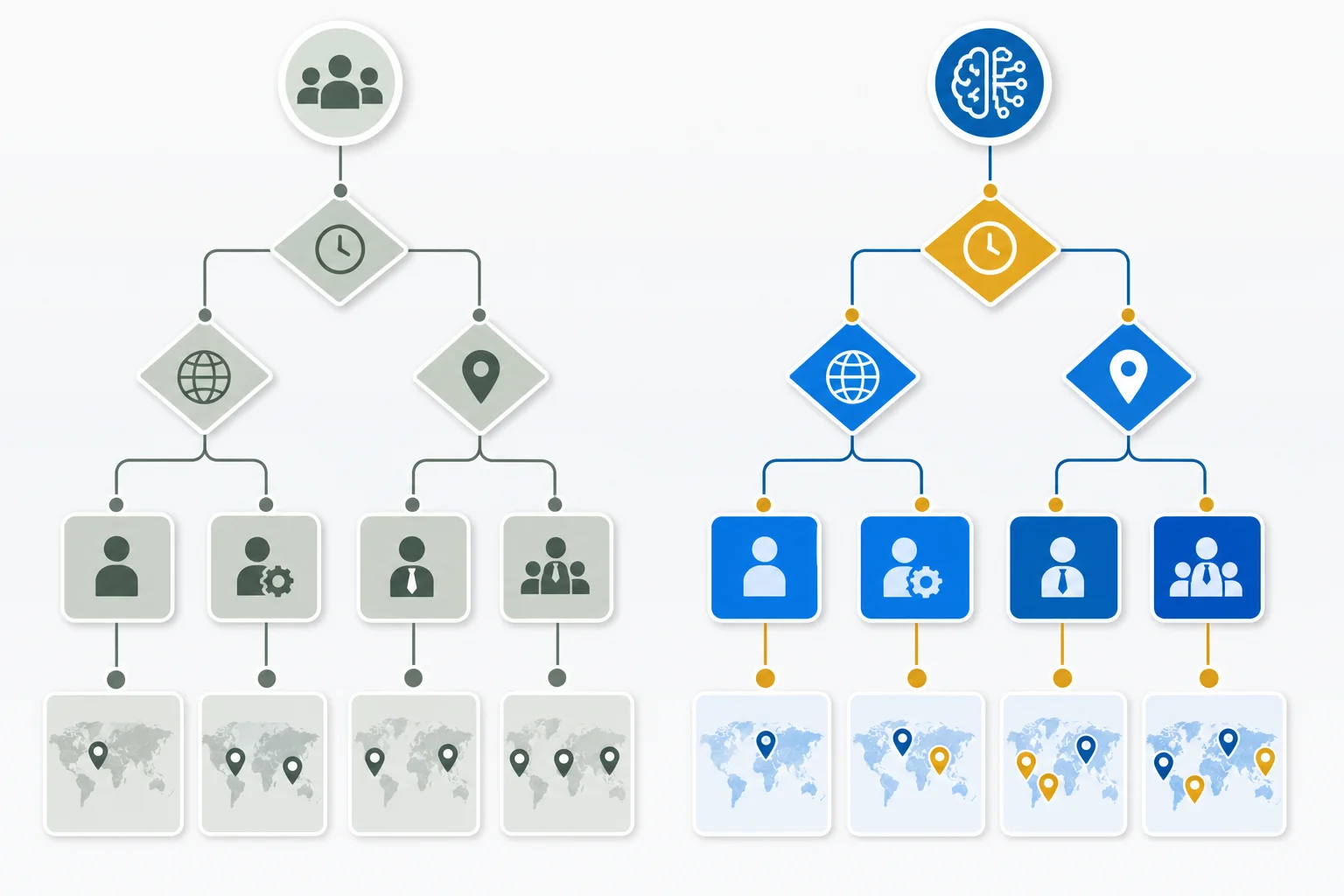
The honest answer is that job boards and recruitment marketplaces are not always in direct competition. They serve different hiring scenarios well. The question is whether your current hiring mix matches the model you are using.
A practical way to think about this: if a role could be filled by someone who is actively looking and would find your job post, a job board is a reasonable starting point. If the role requires someone who is currently employed, performing well, and would only move for the right opportunity, a recruitment marketplace is the right tool.
Most mid-market and enterprise TA teams in India need both, but they tend to over-invest in job boards for roles that will never fill from an active-seeker pool. The result is wasted subscription spend, extended time-to-fill, and frustrated hiring managers. This comparison of hiring platforms in India covers the full spectrum of options, including where agencies and AI marketplaces sit relative to job boards.
For companies evaluating whether to consolidate their sourcing model, the RPO vs. agency comparison for India mid-market provides a useful parallel framework for thinking about outsourced hiring models.
The rule of thumb: Use job boards to fill roles where active candidates are sufficient. Use a recruitment marketplace to fill roles where the best candidate is not looking.
For most mid-market and enterprise companies, the answer is no, and that is not the right goal. Job boards serve a legitimate function for high-volume, entry-level, and well-defined roles. A recruitment marketplace is the right tool for specialist, senior, and multi-geo roles. The strategic question is whether your current job board spend is being applied to roles it can actually fill.
Job board algorithms match candidates to job descriptions based on keyword overlap and profile completeness. They work within the active-seeker database. AI matching in a recruitment marketplace like CBREX (C Map) routes job requirements to the most relevant specialist agencies based on their track record, domain expertise, and placement history, then those agencies source from their passive talent networks. The AI is matching the sourcing capability to the role, not just keywords to profiles.
Pay-on-hire means you pay a placement fee only when a candidate accepts an offer and joins. There are no upfront retainers, no subscription fees, and no charges for unsuccessful searches. For budget planning, this means your recruitment spend is directly tied to hiring outcomes, you can model cost-per-hire accurately without accounting for sunk subscription costs. This FAQ on pay-on-hire recruitment covers the mechanics in detail.
It depends on the nature of the volume. For high-volume hiring of specialist roles across multiple geographies, a common scenario for Indian companies expanding globally, a recruitment marketplace with AI-powered RPO capability handles scale well. For very high-volume, low-complexity hiring (hundreds of entry-level roles in a single location), a dedicated RPO or job board model may be more cost-efficient. The right answer depends on role complexity, geography, and the seniority of the talent you need.
This is one of the clearest advantages over job boards. Job boards deliver raw applications, unscreened, often AI-optimised CVs that match keywords but not context. CBREX's three-level screening process combines agency pre-screening, C Screen AI validation (trained on 250,000+ anonymised resumes across 570+ job categories), and stack ranking. Hiring managers receive interview-ready shortlists, not application piles.
The recruitment marketplace vs job boards decision is not about which model is universally better. It is about which model matches the roles you are trying to fill, the geographies you are hiring in, and the operational capacity of your TA team.
If your hiring mix includes specialist roles, leadership positions, multi-geo requirements, or niche skills, and if your current job board spend is producing slow time-to-fill and low candidate quality for those roles, a recruitment marketplace is worth a serious evaluation. The pay-on-hire model means the financial risk of switching is low. The operational upside, faster shortlists, better candidate quality, single-contract simplicity, is significant.
CBREX connects Indian mid-market and enterprise companies with 4,000+ specialist recruiting firms across 33 countries through a single contract, AI-powered vendor matching, and a pay-on-hire model. If your current sourcing model is not filling your hardest roles fast enough, book a demo to see how the marketplace model works in practice, or sign up to post your first role with no upfront commitment. If you would rather talk through your specific hiring challenge first, reach out directly.


