Read Time:
19 Mins
How to Choose the Right Recruitment Outsourcing Model


Picture this: your CFO has just approved headcount for 40 roles across India, the UAE, and Poland — all to be filled within the same quarter. You open your agency contact list. Seventeen firms. Three of them have ever placed anyone outside India. None of them cover all three geographies. And every single one wants a retainer before they start.
This is the moment most TA leaders at India mid-market companies realise their recruitment model wasn't built for where the business is going. The question isn't whether to outsource hiring. It's which recruitment outsourcing model actually fits your company's size, hiring volume, and geographic complexity — and which ones will quietly drain your budget while delivering mediocre results.
This guide walks you through the four main models, the decision criteria that matter, and the red flags that should end any vendor conversation before it starts.

Before you can choose the right model, you need a clear-eyed view of what each one actually delivers, not the marketing version, but the operational reality.
RPO means handing over part or all of your recruitment function to an external provider. The RPO firm acts as an extension of your TA team, managing sourcing, screening, interview coordination, and often employer branding. RPO comes in three flavours: full-cycle (end-to-end ownership), project-based (for a defined hiring sprint), and selective (specific stages only). RPO providers typically charge a management fee plus a cost-per-hire, and contracts run 12-36 months.
A managed service sits between RPO and a staffing agency. The provider manages a panel of agencies on your behalf, handling vendor selection, briefing, performance tracking, and consolidated invoicing. You get one point of contact instead of fifteen. The trade-off is that you're still dependent on the quality of the underlying agency network, and management fees add a layer of cost on top of placement fees. For more detail, see Managed Recruitment Services in India: 2026 Guide.
A recruitment marketplace connects employers directly with a curated network of specialist recruiting firms through a single platform and contract. AI matches your job requirements to the most relevant agencies. You pay only when a hire is made, no retainers, no seat licences, no management fees. The marketplace model is particularly powerful for companies with variable hiring volumes, niche skill requirements, or multi-country hiring needs.
The traditional agency model is the oldest and most familiar. You brief one or more agencies, they source candidates, and you pay a placement fee (typically 8-20% of first-year salary) when you hire. Simple in theory. In practice, most companies end up managing a fragmented panel of agencies with inconsistent quality, duplicate CVs, and no visibility into who is actually working on their roles.
Here's a quick comparison of the four models across the dimensions that matter most to TA leaders:
Hiring volume is the single most important variable in this decision. Get it wrong and you'll either overpay for infrastructure you don't use or underinvest in capacity you desperately need.
If your hiring plan is large, consistent, and well-defined, think a GCC scaling from 50 to 500 people over two years, a full-cycle RPO can make sense. The provider builds dedicated capacity around your brand, your processes, and your ATS. The economics work when volume is high enough to absorb the management fee.
This is where most India mid-market companies actually sit. Hiring plans shift with business cycles. A quarter with 30 open roles is followed by a quarter with 8. In this range, paying a retainer or a monthly management fee for an RPO is a structural mismatch. A recruitment marketplace or a well-managed contingency panel gives you the flexibility to scale up and down without carrying fixed costs.
Launching a new product line, opening a new country office, or backfilling an entire team after attrition? Project RPO or a marketplace with deep specialist coverage can mobilise quickly without requiring a long-term contract. The key is speed of activation, how fast can the model get qualified candidates in front of your hiring managers?
The trap most mid-market TA leaders fall into: signing a 24-month RPO contract based on an optimistic hiring forecast, then spending 18 months paying for capacity they don't use when the business slows down.
For a deeper look at how the RPO and agency models compare specifically for Indian mid-market companies, RPO vs Agency India: Which Model Wins for Mid-Market Companies breaks down the economics in detail.
Geographic complexity is where most recruitment outsourcing models quietly break down, and where the cost of choosing the wrong model becomes very visible, very fast.
If all your hiring is in India, almost any model can work. The agency market is deep, RPO providers are plentiful, and the compliance landscape is familiar. The decision comes down to volume, cost, and quality, not geography.
The picture changes completely when you're hiring across multiple countries simultaneously. An India mid-market company hiring in Japan, Brazil, the UAE, and Poland in the same quarter faces four distinct labour markets, four sets of employment regulations, four different candidate sourcing channels, and potentially four separate agency contracts, invoices, and points of contact.
Traditional agencies almost never solve this well. A firm that's genuinely strong in Bengaluru tech hiring is rarely the right partner for a senior manufacturing role in Monterrey or a compliance specialist in Hong Kong. Claiming multi-country coverage and actually delivering it are very different things.
This is where a recruitment marketplace with a global specialist network has a structural advantage. CBREX, for example, connects employers to 4,000+ specialist recruiting firms across 33 countries through a single contract and a single invoice. AI vendor matching (C Map) routes each role to the agencies with the deepest expertise in that specific function and geography, not just the agencies that happen to be on your panel. For companies navigating global hiring from India, this single-contract model eliminates the administrative overhead that kills TA team productivity.
Multi-geo hiring also means multi-geo compliance. Employment law in Japan is fundamentally different from employment law in Brazil or the UAE. The right outsourcing model should either include compliance guidance or integrate cleanly with your EOR (Employer of Record) provider. Ask any vendor you're evaluating: "How do you handle compliance in markets where we don't have a legal entity?" If the answer is vague, that's a red flag.
There's a version of every recruitment outsourcing model that claims to cover everything. Generalist RPOs. Full-service staffing firms. Job boards with millions of profiles. The problem is that "covering" a market and genuinely owning it are not the same thing.
A pharma regulatory affairs specialist in Germany. A senior embedded systems engineer in South Korea. A trade finance relationship manager in Hong Kong. These roles don't get filled by posting on a job board or briefing a generalist agency. They get filled by a recruiter who has spent years building relationships with passive candidates in that specific function, in that specific market.
Generalist RPO providers and large staffing firms often have broad geographic footprints but thin specialist depth. They can fill volume roles efficiently. They struggle with niche, senior, or technically complex positions, which are precisely the roles that matter most to a scaling mid-market company.
The recruitment marketplace model solves this through intelligent routing. CBREX's C Map AI analyses each job requirement and matches it to the specialist agencies in the network with the highest placement track record for that specific role type and geography. A manufacturing company hiring a plant operations head in Vietnam gets matched to agencies that have actually placed plant operations heads in Vietnam, not agencies that claim they can.
This is a fundamentally different approach from maintaining your own agency panel, where coverage is limited to the firms you already know and have contracts with. For more on how specialist sourcing works at scale, see Hiring Platforms India: Job Boards vs. Agencies vs. AI Marketplaces.
Any vendor that claims to cover all roles, all industries, and all geographies with equal depth is either very large (and therefore very expensive) or overstating their capabilities. Ask for placement data: "How many roles have you filled in this specific function and geography in the last 12 months?" The answer will tell you more than any capability deck.
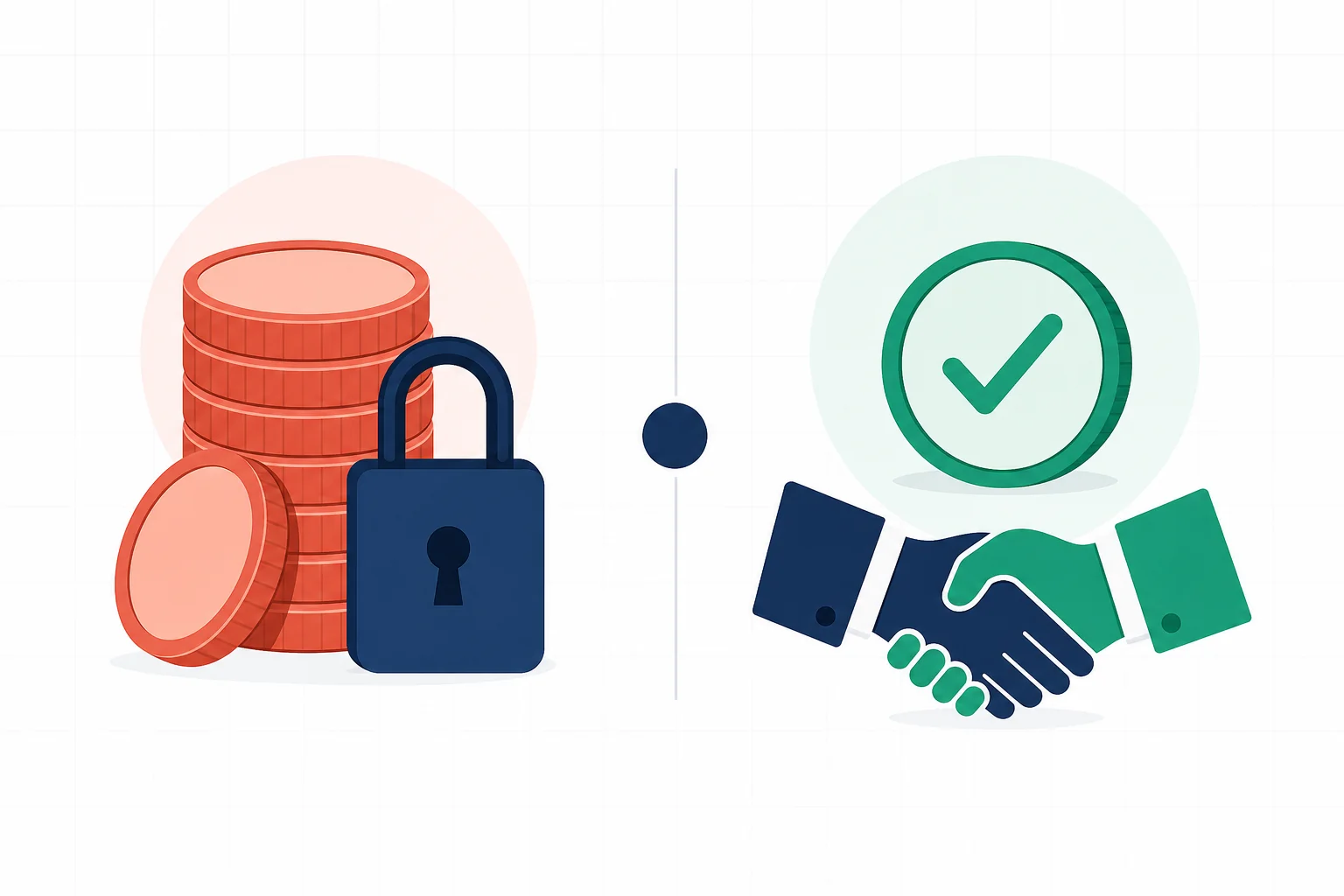
Cost structure is where recruitment outsourcing models diverge most sharply, and where the hidden costs are most likely to surprise you.
Retained search makes sense for a narrow set of use cases: C-suite hiring, board-level appointments, or highly confidential searches where you need a firm to dedicate significant research capacity upfront. Outside of those scenarios, paying a retainer is essentially paying for recruiter activity rather than recruiter results.
The problem with retainers at scale is that they misalign incentives. Once a firm has been paid upfront, the urgency to fill your role competes with the urgency to win the next retainer from another client. For a detailed breakdown of what retainer fees actually cost, Recruitment Agency Cost in India: What You're Really Paying is worth reading before your next vendor negotiation.
The pay-on-hire model is straightforward: you pay a placement fee only when a candidate is hired and starts. No upfront fees, no monthly retainers, no seat licences. The vendor's revenue is entirely contingent on delivering a result. This aligns incentives cleanly, the agency only gets paid if you get a hire.
CBREX operates entirely on this model. Employers post roles, AI matches them to specialist agencies, and fees are only triggered by successful placements. There are no subscription fees, no retainers, and no management fees layered on top.
For a full picture of what different models actually cost, see RPO vs Agency India: Which Model Wins for Mid-Market Companies.
A recruitment outsourcing model that doesn't integrate cleanly with your existing ATS creates a data problem that compounds over time. Candidate records live in two systems. Hiring managers can't see pipeline status without logging into a separate portal. Reporting requires manual reconciliation. What starts as a minor inconvenience becomes a significant drag on TA team productivity.
Some RPO providers and recruitment technology vendors require you to adopt their proprietary platform as a condition of the engagement. This creates lock-in that goes beyond the contract term, migrating candidate data, retraining hiring managers, and rebuilding reporting dashboards is expensive and disruptive. The right outsourcing model should plug into your existing infrastructure, not replace it.
CBREX integrates with all major ATS platforms, meaning candidate data flows directly into your existing workflow. Hiring managers see pre-screened, stack-ranked candidates in the system they already use. For more on what good ATS integration looks like in practice, AI Resume Screening: How to Choose the Right Tool in 2026 covers the technical criteria in detail.
The quality of candidates entering your pipeline is the most direct measure of any outsourcing model's value. Yet it's the dimension that gets the least scrutiny during vendor selection, because it's the hardest to assess before you've actually used the service.
Most job boards, ATS-based sourcing tools, and even some RPO providers draw primarily from the active candidate pool, people who are actively looking for a new role right now. Active candidates represent roughly 20-30% of the total talent market. The best candidates for most roles, particularly senior, specialist, or niche positions, are passive: employed, performing well, and not browsing job boards.
Reaching passive talent requires human recruiters with genuine market relationships. AI-only platforms that scrape LinkedIn or recycle database profiles cannot replicate this. The right outsourcing model combines specialist human recruiters (who have the relationships) with AI screening (which ensures quality control at scale).
CBREX's screening process works in three stages. First, the specialist agency pre-screens candidates based on the role brief. Second, C Screen, CBREX's AI screener trained on 250,000+ anonymised resumes across 570+ job categories, validates each CV against the role requirements with 98% accuracy. Third, candidates are stack-ranked so hiring managers see the strongest profiles first, not a flat list of 40 CVs to wade through.
The practical impact: hiring managers spend time on candidates who are genuinely qualified, not on filtering out the noise. For a detailed look at how this affects time-to-hire, Time to Hire: The Hidden Cost of Roles Left Open quantifies what slow screening actually costs.
If a vendor's sourcing strategy relies primarily on job board postings, LinkedIn InMail blasts, or their own candidate database, you will see the same profiles that every other employer using that platform sees. For common roles in competitive markets, this is inefficient. For niche roles in specialist markets, it simply doesn't work.
Beyond the decision criteria above, there are specific warning signs that should give any TA leader pause during vendor evaluation.
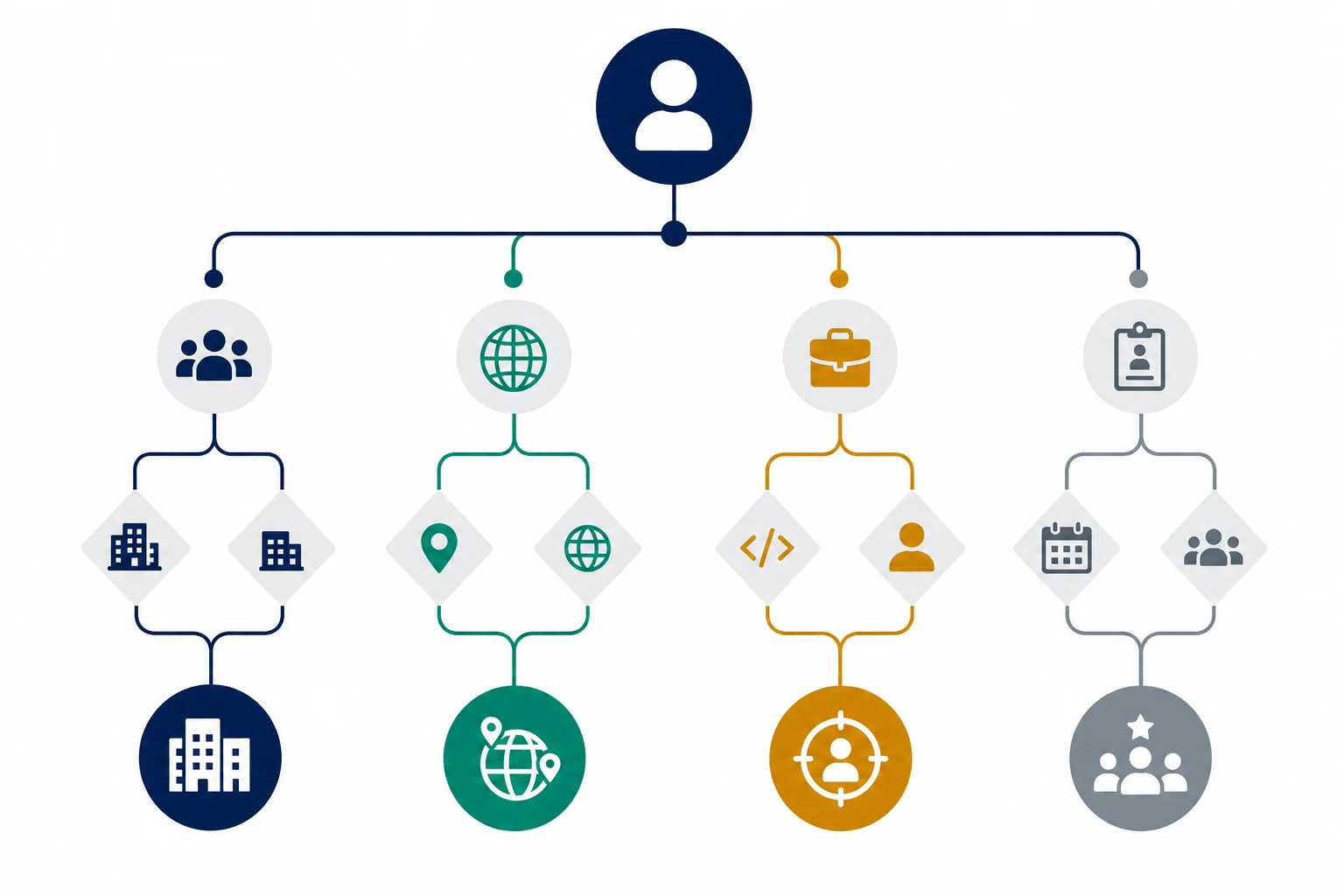
Use this framework to map your situation to the model that fits best. Most companies will find themselves clearly in one quadrant, though some will benefit from a hybrid approach.
CBREX is built for the third scenario, and increasingly for companies that want the benefits of a managed service without the management fee overhead. The platform combines AI-powered vendor matching, three-level candidate screening, and a single contract covering 4,000+ specialist agencies across 33 countries. For India mid-market companies hiring across LATAM, MENA, SEA, APAC, and Europe, it provides the specialist depth of a curated agency panel with the operational simplicity of a single platform. For a direct comparison of the marketplace and staffing agency models, the differences in cost structure and candidate quality are significant.
Yes, and many mid-to-large companies do. A common hybrid is using an RPO for high-volume domestic hiring while using a recruitment marketplace for specialist or international roles. The key is ensuring the models don't create conflicting processes or duplicate candidate pipelines.
Most RPO providers target companies with at least 100-150 hires per year to make the economics work. Below that threshold, the management fee and contract overhead typically make RPO more expensive than a marketplace or well-managed agency panel. Project RPO (for a defined hiring sprint) can work at lower volumes, but the minimum engagement size varies by provider.
An RPO provider embeds into your TA function and manages the process end-to-end, typically on a long-term contract with a management fee. A recruitment marketplace connects you to specialist agencies on a pay-on-hire basis, with AI handling vendor matching and screening. The marketplace model gives you more flexibility and lower fixed costs; the RPO model gives you more process ownership and dedicated capacity. For a detailed comparison, see RPO vs Agency India: Which Model Wins for Mid-Market Companies.
Yes, provided the marketplace has access to boutique executive search firms and independent search consultants, not just volume-focused agencies. CBREX's leadership hiring capability routes senior roles to curated boutique firms with no retainer fees. For more on this, Leadership Hiring India: The 2026 Complete Guide covers the full landscape.
The practical approach is to run the new model in parallel for new roles while letting existing agency relationships wind down naturally as open roles are filled. Avoid terminating active agency relationships mid-search, the disruption to live pipelines is rarely worth the short-term cost saving. Most companies complete the transition over one to two hiring cycles.
Five questions that cut through the marketing: (1) How many roles have you filled in my specific function and geography in the last 12 months? (2) What is your fee structure, retainer, pay-on-hire, or management fee? (3) How do you integrate with our ATS? (4) What is your process for sourcing passive candidates? (5) What happens if you don't fill a role, what are the remedies in the contract?
Choosing the right recruitment outsourcing model is one of the highest-leverage decisions a TA leader makes. Get it right and you reduce cost-per-hire, accelerate time-to-fill, and gain access to specialist talent your competitors can't reach. Get it wrong and you spend 18 months paying for a model that doesn't fit your business, while your hiring managers wait for candidates that never arrive.
If you're an India mid-market company hiring across multiple geographies, dealing with niche skill shortages, or simply tired of managing a fragmented agency panel, CBREX was built for exactly this situation. One platform, one contract, 4,000+ specialist agencies, pay only when you hire.
Ready to see how the marketplace model works for your specific hiring needs? Book a demo with the CBREX team and walk through a live example with your actual open roles, or sign up directly to post your first role and see the AI matching in action. If you'd prefer to talk through your situation first, reach out to the team directly.


