Read Time:
20 Mins
Hiring in Romania for Indian Companies: The 2026 Handbook


The Bucharest headcount just cleared finance. Your hiring manager at the Romanian office has already pinged you on Teams asking when the first shortlist will land. Back in your Bengaluru or Mumbai office, you open a browser and type "how to hire in Romania from India" — and what comes back is a mix of law firm articles, EOR vendor pages, and nothing that actually tells you what a mid-level software engineer costs in RON, how long notice periods really run, or whether you even need a local entity.
This handbook answers all of it. Romania is one of Eastern Europe's most compelling talent markets for Indian companies — strong IT depth, a growing pharma and manufacturing base, EU-standard legal infrastructure, and salaries that remain competitive against Western European benchmarks. But the compliance picture is layered, the cultural norms differ from what Indian TA teams expect, and the mistakes that slow hiring down are almost always avoidable. Here is everything you need to move fast and move right.
Before your first job description goes live, get these fundamentals locked in. They shape every decision that follows — from entity structure to offer design.
| Population | Approximately 19 million; working-age population (15, 64) roughly 11, 12 million |
| Official Language | Romanian. English proficiency is high among urban professionals, especially in IT, finance, and pharma |
| Business Language | English is standard in multinational environments; Romanian required for blue-collar and public-sector roles |
| Top Hiring Cities | Bucharest (largest talent pool), Cluj-Napoca (tech hub), Timișoara (manufacturing + IT), Iași (growing tech scene), Brașov (engineering + tourism) |
| Currency | Romanian Leu (RON). Approximate rate: 1 RON ≈ ₹18, 19 INR (mid-2026; verify before budgeting) |
| Time Zone | EET (UTC+2 in winter) / EEST (UTC+3 in summer). Romania is approximately 3.5-4.5 hours behind IST, a workable overlap window of 9 AM, 1 PM Romanian time aligns with early afternoon India |
| EU Membership | Full EU member since 2007. EU employment law framework applies; non-EU nationals require work permits |
The time-zone gap is genuinely manageable. A 9 AM stand-up in Bucharest lands at 12:30 PM IST, well within core hours for both sides. That makes Romania one of the more India-friendly European markets for real-time collaboration.
Romania's Labour Code (Codul Muncii) governs all employment relationships. It is EU-aligned, employee-protective, and non-negotiable, meaning you cannot contract your way out of its core provisions, regardless of what your offer letter says.
Fixed-term contracts are permitted but capped at 36 months total (including renewals). After three renewals or 36 months, the contract automatically converts to indefinite. Use fixed-term contracts carefully, Romanian courts scrutinise them, and misuse creates liability.
Romania is not an at-will jurisdiction. Termination requires either a valid cause (disciplinary or performance-related, with a documented process) or a genuine redundancy. Wrongful dismissal claims are common and courts tend to favour employees. Budget for proper HR and legal support from day one.
This is the first structural decision every Indian company faces. Get it wrong and you either over-invest in infrastructure for a small headcount, or you expose yourself to misclassification risk by using contractors where employees are required.
An Employer of Record (EOR) employs your Romanian staff on your behalf, handling payroll, tax filings, and compliance. The economics favour EOR when:
Classifying a full-time employee as an independent contractor (PFA, Persoană Fizică Autorizată) is a significant risk in Romania. The Romanian tax authority (ANAF) applies a substance-over-form test: if the contractor works exclusively for you, follows your schedule, and uses your equipment, they are likely an employee in the eyes of the law. Penalties include back-payment of all social contributions plus interest. If your Romanian hire will work more than 80% of their time for your company, use an employment contract, not a contractor agreement.
Romanian salaries have risen meaningfully over the past five years, driven by EU accession, tech sector growth, and competition from multinationals. The benchmarks below reflect mid-2026 market rates for Bucharest and Cluj-Napoca. Timișoara and Iași typically run 10-15% lower.

| Role | Gross Monthly (RON) | Approx. Annual Gross (INR) | Net Monthly (RON, approx.) |
|---|---|---|---|
| Software Engineer (mid-level) | 8,000, 14,000 | ₹17, 30 lakh | 5,500, 9,500 |
| Senior Software Engineer / Tech Lead | 14,000, 22,000 | ₹30, 47 lakh | 9,500, 15,000 |
| Sales Manager | 7,000, 12,000 + commission | ₹15, 26 lakh (base) | 4,800, 8,200 |
| Operations Manager | 7,500, 13,000 | ₹16, 28 lakh | 5,100, 8,800 |
| Finance Manager | 8,000, 14,000 | ₹17, 30 lakh | 5,500, 9,500 |
| Country Manager / General Manager | 18,000, 35,000 | ₹38, 75 lakh | 12,000, 23,000 |
Note: INR conversions use an approximate rate of 1 RON ≈ ₹18.5. Verify current rates before finalising budgets. Gross-to-net gap is significant, employee social contributions (CAS + CASS) total 35% of gross salary, reducing take-home substantially.
Romanian hiring timelines are broadly comparable to Western Europe, faster than Germany or France, but slower than India's metro markets. Plan accordingly.
The hidden timeline killer for Indian companies is slow feedback loops. Romanian candidates, especially senior ones, are often fielding multiple offers simultaneously. A 10-day gap between interview rounds is enough to lose a strong candidate to a local competitor. Build a fast-feedback SLA into your hiring process before the first CV lands.
For a deeper look at how slow hiring cycles compound into real business cost, see Time to Hire: The Hidden Cost of Roles Left Open.
Romania punches above its weight as a talent market. Here is what the pool actually looks like for the roles Indian companies most commonly hire.
Romania's unemployment rate sits at approximately 5-6% (mid-2026 estimates), meaning the market is tight for skilled professionals. You are competing against EU multinationals, German, Dutch, and Austrian firms in particular, that have been hiring in Romania for 20+ years and have established employer brands. An Indian company entering the market needs a clear value proposition beyond salary: career growth, global exposure, and equity upside all resonate.
The Indian community in Romania is small (estimated at a few thousand, concentrated in Bucharest). Do not rely on diaspora networks as a primary sourcing channel. The more relevant angle is that Romanian professionals who have worked with Indian multinationals, Infosys, Wipro, TCS, and others have Romanian delivery centres, are already familiar with Indian management styles and reporting structures. Targeting this segment can reduce cultural onboarding friction significantly.
Romanian professionals are direct, technically rigorous, and value clarity over corporate polish. Understanding these norms prevents the most common friction points in cross-border hiring.
Romanians tend to be straightforward in professional settings. They will tell you if a role scope is unclear or if an offer is below market, which is useful, but can feel blunt to Indian hiring managers accustomed to more deferential candidate behaviour. Treat directness as a signal of engagement, not disrespect.
Romanian professionals generally adapt well to Indian management structures, particularly in IT and shared services environments where Indian leadership is common. The main friction points are: unclear escalation paths, slow decision-making from the India side, and compensation benchmarked against Indian rather than Romanian market rates. Address all three proactively in your hiring process.
Romania sits at a 3 out of 5 on a compliance complexity scale for foreign employers, moderate, not severe. Here is the breakdown.
| Dimension | Score (1=Easy, 5=Complex) | Key Detail |
|---|---|---|
| Income Tax | 2 / 5 | Flat 10% personal income tax rate, one of the simplest in the EU. Employer withholds and remits monthly |
| Social Contributions | 4 / 5 | Employee pays CAS (25% pension) + CASS (10% health) = 35% of gross. Employer pays approximately 2.25% (CAM, labour insurance). Total employment cost is significantly above gross salary |
| Payroll Cycle | 2 / 5 | Monthly payroll is standard. D112 declaration filed monthly with ANAF. Straightforward once set up |
| GDPR / Data Privacy | 3 / 5 | Full EU GDPR applies. Candidate data collected during recruitment must have a lawful basis; cross-border data transfers to India require Standard Contractual Clauses (SCCs) or equivalent safeguards |
| Background Checks | 2 / 5 | Criminal record checks are standard and fast (3-5 days). Credit checks require explicit candidate consent under GDPR. Medical checks permitted for roles where health is a genuine occupational requirement |
| Work Permits (non-EU) | 4 / 5 | Non-EU nationals (including Indian citizens) require a work permit and residence permit. Processing time: 30-60 days. Annual quota system applies. Plan well ahead if hiring Indian nationals into Romanian roles |
Overall Score: 3 / 5. The flat income tax is a genuine advantage. The complexity sits in social contribution administration, GDPR compliance for cross-border data flows, and work permit processing for non-EU hires. A competent local payroll provider or EOR removes most of this friction.

Most Indian companies entering Romania face the same sourcing problem: their existing agency relationships are India-centric, their job boards don't reach passive Romanian talent, and building a local agency panel from scratch takes months they don't have.
CBREX solves this through a network of 4,000+ specialist recruiting firms across 33 countries, accessed through a single contract and a single invoice. When a Romanian role is posted on the CBREX platform, the AI matching engine (C Map) routes it to the most relevant specialist agencies for that function, seniority level, and geography, without the Indian TA team needing to know which Romanian agency covers which niche.
For Indian companies managing hiring across multiple geographies simultaneously, the single-contract model eliminates the vendor sprawl that typically accompanies multi-country expansion. One agreement covers Romania, Poland, Germany, Singapore, and every other market in the network. For more on how this model compares to traditional agency relationships, see Recruitment Marketplace vs Staffing Agency: India 2026.
If you are evaluating whether CBREX fits your Romania hiring brief, book a demo with a CBREX specialist, the conversation takes 30 minutes and covers your specific role types, timeline, and entity structure.
These are the errors that consistently slow down or derail Romania hiring for Indian companies. Most are avoidable with the right preparation.
For a broader view of the mistakes Indian companies make when expanding hiring internationally, Global Hiring from India: The 2026 Complete Guide covers the full pattern across markets.
The sticker price of a Romanian hire is the gross salary. The real cost is meaningfully higher. Here is how it breaks down for a mid-level professional role (approximately 10,000 RON gross/month).
To understand how recruiter fees compare across models, Recruitment Agency Cost in India: What You're Really Paying provides a useful framework that applies to international hiring as well.
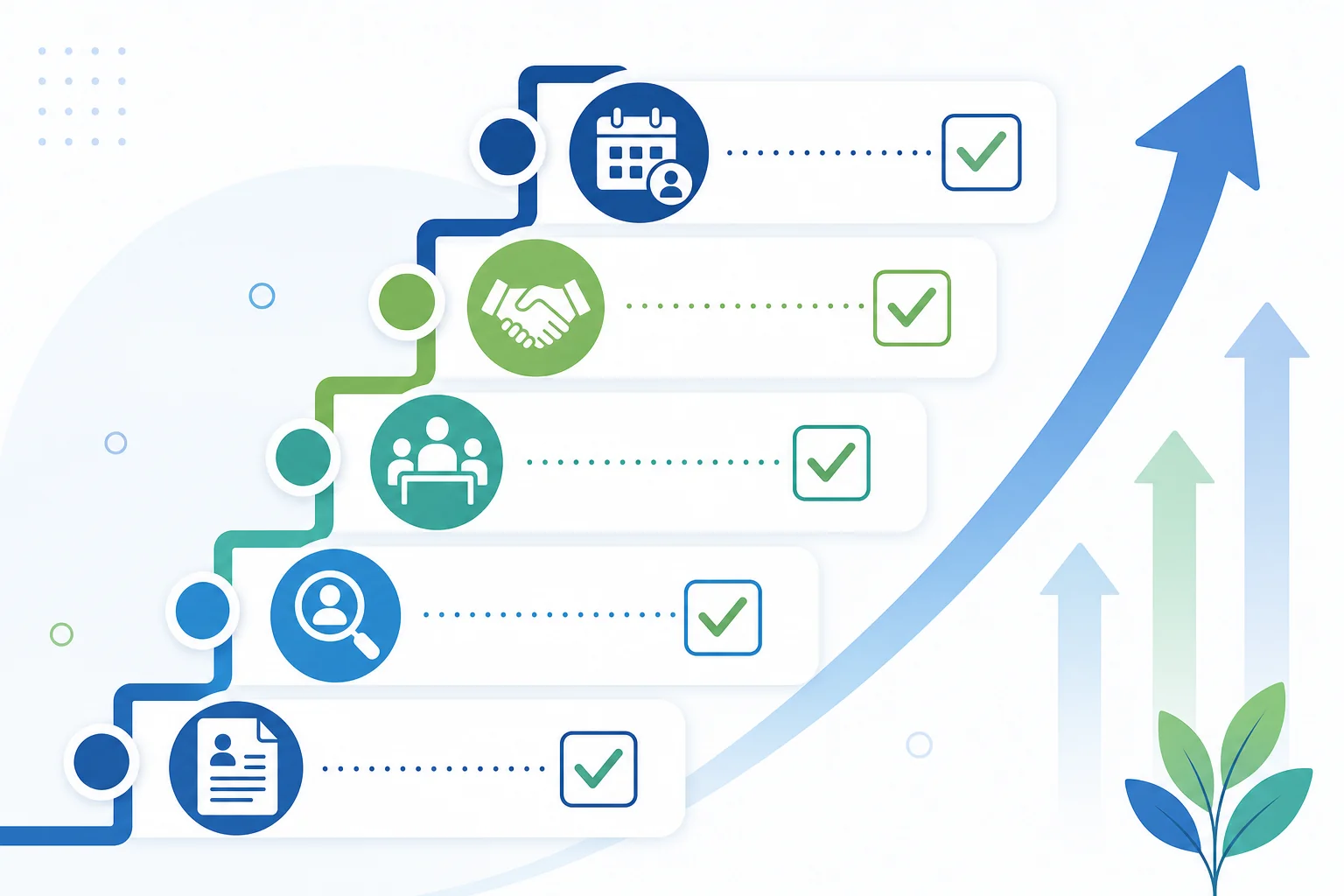
Use this checklist to move from headcount approval to first hire without the delays that catch most Indian companies off guard.
Ready to move from checklist to shortlist? CBREX connects Indian companies to specialist recruiting firms across Romania and 32 other countries, with a 17-day average fulfillment, 98% shortlist accuracy, and zero upfront fees. Book a demo with a CBREX specialist and start hiring in Romania the right way.
No. An Employer of Record (EOR) can employ Romanian staff on your behalf without you setting up a local entity. This is the fastest and most cost-effective route for fewer than 8, 10 hires or for a market-entry phase under 12, 18 months.
Technically yes, but with significant risk. If the engagement meets the substance-over-form test for employment (exclusive work, set hours, company equipment), the Romanian tax authority will reclassify it as employment and assess back-taxes. Use employment contracts for full-time, ongoing roles.
Romania's national minimum wage has been rising steadily. As of mid-2026, it is approximately 3,700, 4,000 RON gross per month (verify the current figure with a local payroll provider before setting offers). For professional roles, market rates are well above this floor.
Romania is an EU member, so full GDPR applies. Any candidate data you collect, CVs, assessment results, interview notes, must have a lawful basis for processing. Transferring that data to India requires Standard Contractual Clauses or another approved transfer mechanism. Your recruitment process, ATS, and data storage must all be GDPR-compliant before the first application arrives.
Expect 8, 12 weeks from job brief to start date for a senior or management role. This includes 4, 6 weeks for sourcing and interviews, plus 6, 8 weeks of notice period. Using a specialist agency with an active Romanian network can compress the sourcing phase to 2, 3 weeks.
Romania offers a combination of deep IT and pharma talent, EU legal infrastructure, a flat 10% income tax rate, and a time zone that overlaps meaningfully with IST. Compared to Poland (higher salaries, more competitive market) or Hungary (smaller talent pool), Romania offers strong depth-to-cost balance, particularly for technology, life sciences, and manufacturing roles. For a comparison across the region, see Hiring in Singapore for Indian Companies: The 2026 Handbook for a contrasting market profile, or explore RPO vs Agency India: Which Model Wins for Mid-Market Companies to decide how to structure your sourcing model for multi-country expansion.
For Indian companies managing hiring across multiple geographies, the administrative overhead of separate agency contracts, invoices, and compliance frameworks in each country adds up fast. Sign up on CBREX to consolidate your global hiring under one contract, and let the platform's AI matching engine route your Romania roles to the right specialist agencies automatically.


