Read Time:
17 Mins
AI-Powered RPO in India: The 2026 Complete Guide


Ask a TA leader at a mid-market Indian company what "RPO" means to them, and you'll get one of two answers. Either a resigned sigh — "we tried it, it was slow and expensive" — or a blank stare, because the term has been stretched so far it no longer means anything specific. Both reactions are understandable. Traditional RPO was built for a different era of hiring. AI-powered RPO is something genuinely different, and this guide explains exactly what that difference looks like in practice.
This is a complete guide to AI-powered recruitment process outsourcing in India — what it includes, how the end-to-end process works, what TA leaders at mid-market and enterprise companies should expect in terms of timelines and costs, and how platforms like CBREX are redefining what outsourced hiring can deliver.
Recruitment Process Outsourcing, at its core, means handing over part or all of your hiring process to an external provider. That definition hasn't changed. What has changed is the engine running underneath it.
Traditional RPO providers relied on human recruiters, proprietary databases, and manual coordination. They were slow to scale, expensive to run, and often locked clients into long-term contracts with seat licences and management fees regardless of hiring outcomes. The model worked reasonably well when hiring volumes were predictable and geographies were limited. Neither of those conditions applies to most Indian mid-market and enterprise companies today.
AI-powered RPO replaces manual coordination with intelligent automation at three critical points:
The result is a model that combines the breadth of a large agency network with the speed and consistency of automated quality control. It is not a job board. It is not a staffing agency. And it is not a traditional RPO with an AI badge on the website. The distinction matters when you are evaluating providers.
"Your best hire isn't looking. AI finds them. Humans close them.", CBREX's operating principle captures the hybrid model precisely: automation handles the coordination and screening; specialist human recruiters handle the sourcing and relationship work that no algorithm can replicate.
For a deeper look at how AI-powered platforms compare to job boards and traditional agencies, see Hiring Platforms India: Job Boards vs. Agencies vs. AI Marketplaces.
The differences between traditional and AI-powered RPO are not cosmetic. They affect every stage of the hiring process, from the first job brief to the final offer.
For a detailed comparison of RPO and agency models specifically for Indian mid-market companies, see RPO vs Agency India: Which Model Wins for Mid-Market Companies.
Understanding the process in detail helps TA leaders set realistic expectations and brief their internal stakeholders accurately. Here is how AI-powered RPO works at each stage.

The process begins with a structured job brief, role title, seniority, location, key responsibilities, must-have skills, and compensation range. The quality of this brief directly affects the quality of the AI matching that follows. A well-structured intake takes 30-45 minutes and is typically supported by a dedicated account manager who helps translate business requirements into a format the AI can act on.
Once the brief is submitted, the platform's AI vendor matching engine, CBREX calls this C Map, analyses the role against a network of 4,000+ specialist recruiting firms across 33 countries. It scores agencies on relevance (do they specialise in this function, industry, and geography?), availability (do they have active candidate pipelines for this role type?), and historical performance (what is their fill rate and time-to-hire for similar roles?). The top-matched agencies receive the brief simultaneously, creating competitive sourcing pressure that a single-agency model cannot replicate.
Matched agencies begin sourcing immediately. Because these are specialist firms, not generalist recruiters covering every function, they have existing networks of passive candidates in the relevant domain. This is the human layer that AI-only platforms cannot replace: a specialist pharma recruiter in Germany has relationships with regulatory affairs professionals who are not on any job board. The agency pre-screens candidates against the brief before submission.
Every CV submitted by an agency passes through the platform's AI screening engine, C Screen, before reaching the hiring manager. C Screen is trained on 250,000+ anonymised resumes across 570+ job categories and delivers 98% accuracy in fitment assessment. It validates each candidate against the job specification, flags gaps, and stack-ranks the shortlist so the hiring manager sees the strongest candidates first. This eliminates the noise of unscreened submissions and the time wasted reviewing CVs that should never have been sent.
The hiring manager receives a curated shortlist of pre-screened, stack-ranked candidates, typically within 5-7 business days for standard roles, and 7-10 days for highly specialised or international positions. Each candidate profile includes the agency's assessment, the AI screening score, and a fitment summary. The hiring manager's time is spent on interviews, not on filtering.
Once a candidate is selected, the platform supports offer management and coordinates the handoff to onboarding. The single contract and unified invoicing model means there is no separate negotiation with the placing agency, the commercial terms are already agreed at the platform level.
For a detailed look at how slow hiring cycles cost more than most TA leaders realise, see Time to Hire: The Hidden Cost of Roles Left Open.
The shift toward AI-powered RPO in India is not driven by technology enthusiasm. It is driven by specific operational problems that traditional models have failed to solve.
A mid-market Indian company hiring across five geographies might have 15-20 agency relationships, each with its own contract, invoice format, and account manager. Managing this panel consumes significant TA bandwidth, time that should be spent on hiring strategy, not vendor administration. Vendor sprawl also creates inconsistent candidate quality, because not every agency on the panel is the right fit for every role. AI-powered RPO consolidates this under a single contract while expanding the effective agency network to thousands of specialist firms.
Roles in pharma regulatory affairs, semiconductor design, fintech compliance, and advanced manufacturing cannot be filled from a generalist agency's active database. They require specialist recruiters with deep domain networks and the ability to reach passive candidates. AI vendor matching routes these roles to the agencies most likely to have those networks, something a static preferred supplier list cannot do.
Indian mid-market companies expanding into MENA, SEA, EMEA, and APAC face a specific challenge: they need local specialist knowledge in markets where they have no existing agency relationships. Building those relationships market by market takes months. A platform with a pre-vetted global agency network compresses that timeline dramatically. See Global Hiring from India: The 2026 Complete Guide for a full breakdown of the strategic considerations.
Every week a critical role stays open has a measurable cost, in lost productivity, delayed projects, and the risk of losing the candidate to a faster-moving competitor. AI-powered RPO's speed advantage is not a marketing claim; it is a structural outcome of parallel agency sourcing and automated screening running simultaneously rather than sequentially.
Many Indian enterprises have invested in applicant tracking systems, Workday, SAP SuccessFactors, Greenhouse, or homegrown platforms. A good AI RPO solution integrates seamlessly with these systems, so candidate data flows directly into the ATS without manual re-entry. For a full guide to ATS integration in the Indian context, see Talent Acquisition in India 2026: The Complete Local Guide.
TA leaders evaluating AI-powered RPO need concrete benchmarks, not marketing promises. Here is what the data and operational experience suggest.
The pay-on-hire model means there are no retainer fees, no seat licences, and no management fees charged upfront. You pay a placement fee only when a candidate successfully joins. This fundamentally changes the risk profile of outsourced hiring, the provider's incentive is aligned with yours. For a detailed breakdown of what recruitment outsourcing actually costs across different models, see Recruitment Agency Cost in India: What You're Really Paying.
A well-functioning AI RPO engagement delivers a shortlist of 3-5 genuinely qualified, pre-screened candidates within the first week. Hiring managers spend their time on interviews, not on filtering. The TA team has real-time visibility into pipeline status. Invoicing is consolidated. And the agency network expands or contracts based on role requirements, not based on which firms happen to be on a legacy preferred supplier list.
What to watch out for: providers who claim "AI-powered" but deliver unscreened CVs from a single agency, or who charge management fees regardless of hiring outcomes. The AI label is widely misused. Ask specifically about the screening methodology, the agency network size, and the commercial model before signing anything.
CBREX is an AI-powered talent acquisition marketplace built specifically for the hiring challenges that Indian mid-market and enterprise companies face. Here is how the platform's components work together to deliver AI-powered RPO.
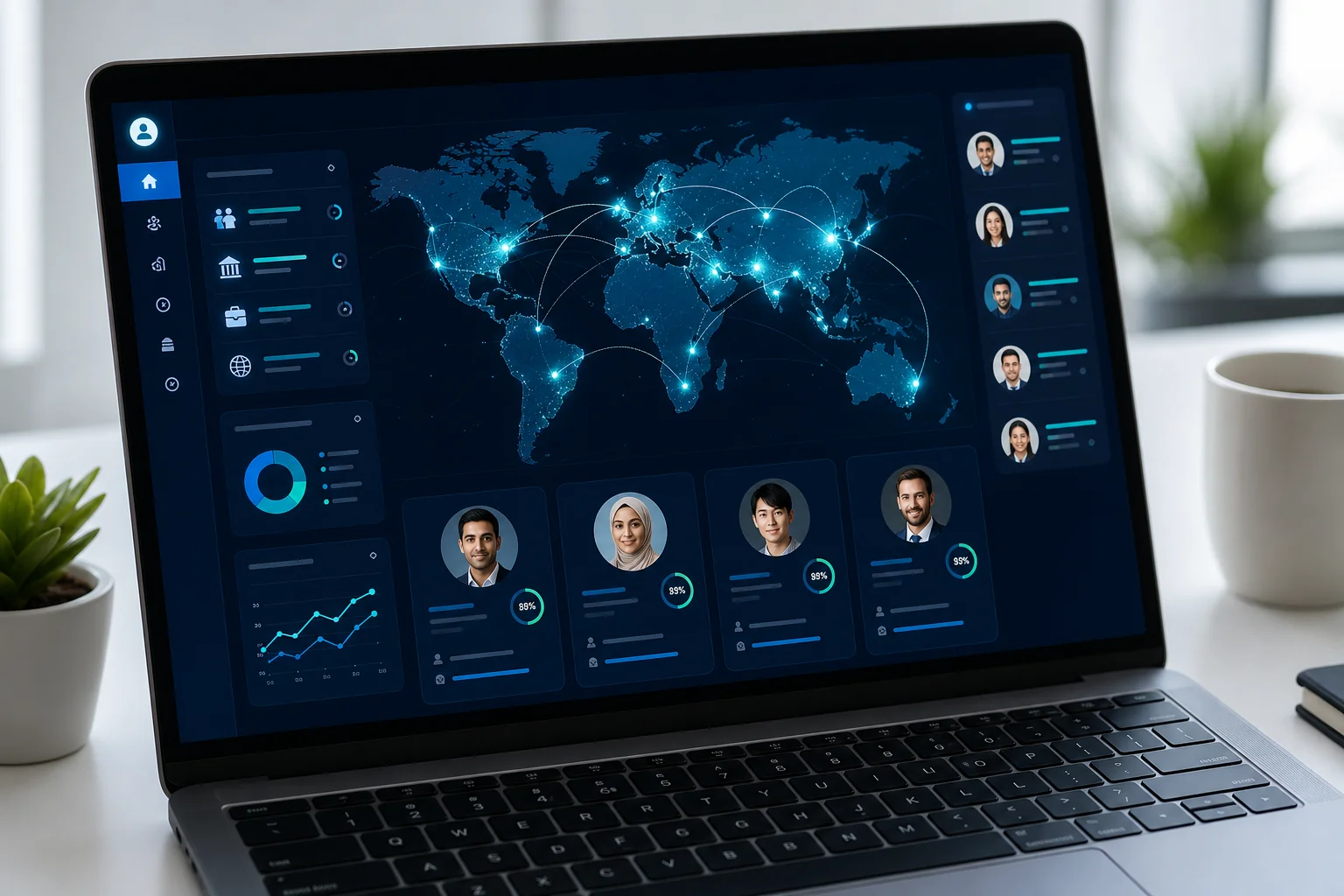
C Map is CBREX's AI vendor matching engine. When a job brief is submitted, C Map analyses the role against 4,000+ specialist recruiting firms across 33 countries and routes it to the agencies most likely to fill it. The matching considers role type, industry, geography, seniority level, and each agency's historical performance on similar roles. This replaces the manual process of briefing agencies one by one, and ensures that every role reaches the right specialist, not just the nearest generalist.
C Screen is CBREX's AI resume screening engine, trained on 250,000+ anonymised resumes across 570+ job categories. It delivers 98% accuracy in fitment assessment, validating every CV submitted by an agency before it reaches the hiring manager. C Screen stack-ranks candidates, flags gaps, and produces a fitment summary that gives hiring managers the context they need to make fast, informed decisions. For a deeper look at how AI resume screening works and what to look for in a tool, see AI Resume Screening: How to Choose the Right Tool in 2026.
CBREX's screening process has three distinct layers: agency pre-screen (the specialist recruiter validates the candidate against the brief), C Screen AI validation (automated fitment assessment and gap analysis), and stack ranking (candidates ordered by match quality before delivery to the hiring manager). This three-level process is what separates a genuinely pre-screened shortlist from a bulk CV dump.
One of the most practically significant features of CBREX's model is the single contract. One agreement covers access to 4,000+ agencies across 33 countries. One invoice per placement, regardless of which agency made the hire. No separate negotiations, no multi-currency invoice reconciliation, no legal review of 20 different agency agreements. For companies managing multi-country hiring, this alone eliminates weeks of administrative overhead per quarter.
CBREX integrates seamlessly with all major applicant tracking systems. Candidate data flows directly into your existing ATS, so there is no parallel system to maintain and no manual data entry. The platform works with your existing tech stack, not against it.
Mr. C (Beta) is CBREX's master AI agent, a system that delivers pre-screened, interview-ready candidates by orchestrating the entire sourcing and screening workflow autonomously. C Assess (Beta) adds AI-driven fitment and assessment capabilities, giving hiring managers a deeper view of candidate suitability beyond CV matching. Both tools represent the next generation of AI RPO capability, moving from AI-assisted to AI-orchestrated hiring.
CBREX's network includes curated boutique executive search firms and independent search consultants for VP, C-suite, and board-level roles. The pay-on-hire model applies here too, no retainer fees, no upfront payments. For a full guide to leadership hiring in India, see Leadership Hiring India: The 2026 Complete Guide.
For Indian companies expanding internationally, AI-powered RPO solves a problem that no domestic hiring tool can address: how do you hire specialist talent in markets where you have no existing agency relationships, no local HR team, and no time to build either from scratch?

CBREX's network covers 33 countries, including key markets for Indian mid-market expansion: the UAE, Saudi Arabia, and Qatar in MENA; Singapore, Malaysia, Indonesia, Vietnam, and the Philippines in SEA; Germany, the UK, Poland, Romania, Hungary, Ireland, and the Netherlands in Europe; the USA, Mexico, and Brazil in the Americas; and Australia, Japan, South Korea, and China in APAC.
The single contract model is particularly valuable for multi-country hiring. Instead of negotiating separate agency agreements in each market, each with different fee structures, currency terms, and legal requirements, a company using CBREX operates under one master agreement. The platform handles agency coordination, currency conversion, and consolidated invoicing across all geographies.
For companies hiring in niche skill areas across multiple countries simultaneously, a common scenario for pharma, manufacturing, and technology firms, the AI vendor matching engine routes each role to the specialist agency with the deepest network in that specific domain and geography. A regulatory affairs role in Germany goes to a different agency than a fintech compliance role in Singapore, even if both are submitted on the same day. See Hiring Niche Skills Overseas: A TA Playbook for a practical breakdown of this approach.
For companies looking to consolidate a fragmented vendor panel across geographies, the managed service model provides a single point of accountability, one account manager, one contract, one invoice, while the underlying agency network provides the specialist depth that a single RPO provider's internal team cannot match. See How to Build a Consolidated Recruitment Vendor Pool for a step-by-step guide to vendor consolidation.
Yes, and it is arguably where AI RPO delivers the most value. The AI vendor matching engine routes niche roles to specialist agencies with deep domain networks, rather than relying on a generalist firm's active database. Roles in pharma regulatory affairs, semiconductor design, fintech compliance, and advanced manufacturing are exactly the use cases where specialist agency matching outperforms any job board or generalist recruiter.
CBREX integrates with all major applicant tracking systems. The integration is typically set up during onboarding and requires no custom development. Candidate data flows directly into your ATS, maintaining your existing workflows and reporting structures.
CBREX's model does not require a minimum volume commitment. The pay-on-hire structure means you can use the platform for a single critical role or for a high-volume hiring programme. There are no seat licences or management fees that make low-volume use uneconomical.
AI job boards surface candidates who are actively searching for jobs and have optimised their profiles for algorithmic discovery. AI RPO with a specialist agency network reaches passive candidates, high performers who are not on any job board and are not responding to job postings. The specialist recruiter's relationship-based sourcing is what accesses this talent pool; the AI handles matching, screening, and coordination.
Yes. CBREX's network includes curated boutique executive search firms and independent search consultants for VP, C-suite, and board-level roles. The pay-on-hire model applies at all seniority levels, there are no retainer fees for leadership searches. For a detailed guide to leadership hiring without retainers, see Leadership Hiring India: The 2026 Complete Guide.
Replacement guarantees are part of the standard commercial terms. If a placed candidate leaves within the guarantee period, the platform coordinates a replacement search at no additional placement fee. The specific terms vary by role type and seniority, your account manager will confirm the applicable guarantee period during onboarding.
The single contract model simplifies the legal and compliance layer significantly. CBREX's master agreement covers all agencies across all geographies, so you are not managing 20 different agency contracts with varying compliance requirements. For market-specific compliance considerations, the platform's account management team provides guidance on local hiring regulations and documentation requirements.
AI-powered RPO in India is not a rebranded version of what came before. It is a structurally different model, one that combines the specialist depth of a large agency network with the speed and consistency of AI-driven matching and screening, under a commercial structure that aligns the provider's incentives with yours.
For mid-market and enterprise Indian companies managing multi-geography hiring, niche skill requirements, or vendor sprawl, the case for switching is straightforward: faster shortlists, higher candidate quality, lower administrative overhead, and a cost model that only charges when a hire is made.
If your current hiring process involves managing more than five agency relationships, waiting more than two weeks for a shortlist, or reviewing CVs that should never have been sent, it is worth seeing what a genuinely AI-powered RPO model looks like in practice.
Book a demo with CBREX to see the AI vendor matching and screening process on a live role from your current pipeline. Or if you want to explore the platform first, sign up and post your first role, no retainer, no seat licence, no upfront commitment. You can also reach out directly if you'd prefer to talk through your specific hiring challenges before committing to a demo.


