Read Time:

AI for Campus and Early-Career Hiring: Managing Volume Without Losing Human Touch

By

Campus and early-career recruitment can be exhilarating — but also overwhelming. Hundreds, sometimes thousands, of applications flood in for internships, graduate programs, and entry-level roles. Manually reviewing each candidate is time-consuming, inconsistent, and often leaves little room for engagement.

AI is quietly helping recruiters handle high-volume early-career hiring, allowing them to focus on the human side of recruitment.

A real-world example: scaling campus hiring

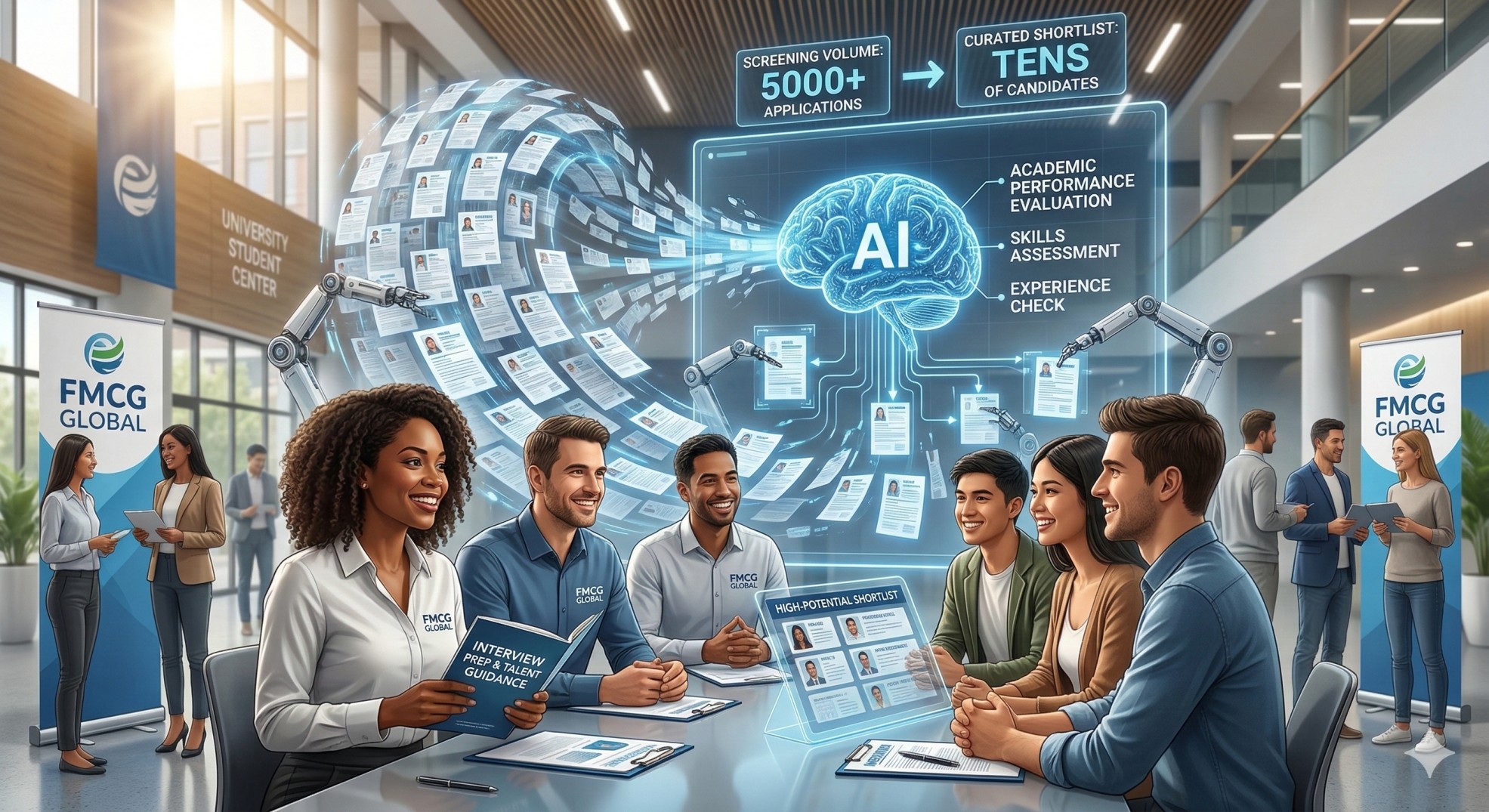
A multinational FMCG company hiring interns and entry-level employees across multiple regions faced a familiar challenge: recruiter burnout. Each campus hiring drive generated thousands of applications, and initial screening took weeks.

By introducing AI-driven pre-assessment and shortlisting, the recruitment team was able to automatically evaluate candidates on skills, academic performance, and relevant experiences. Recruiters received curated lists of high-potential candidates and could focus their energy on engaging with applicants, preparing them for interviews, and building long-term talent pipelines.
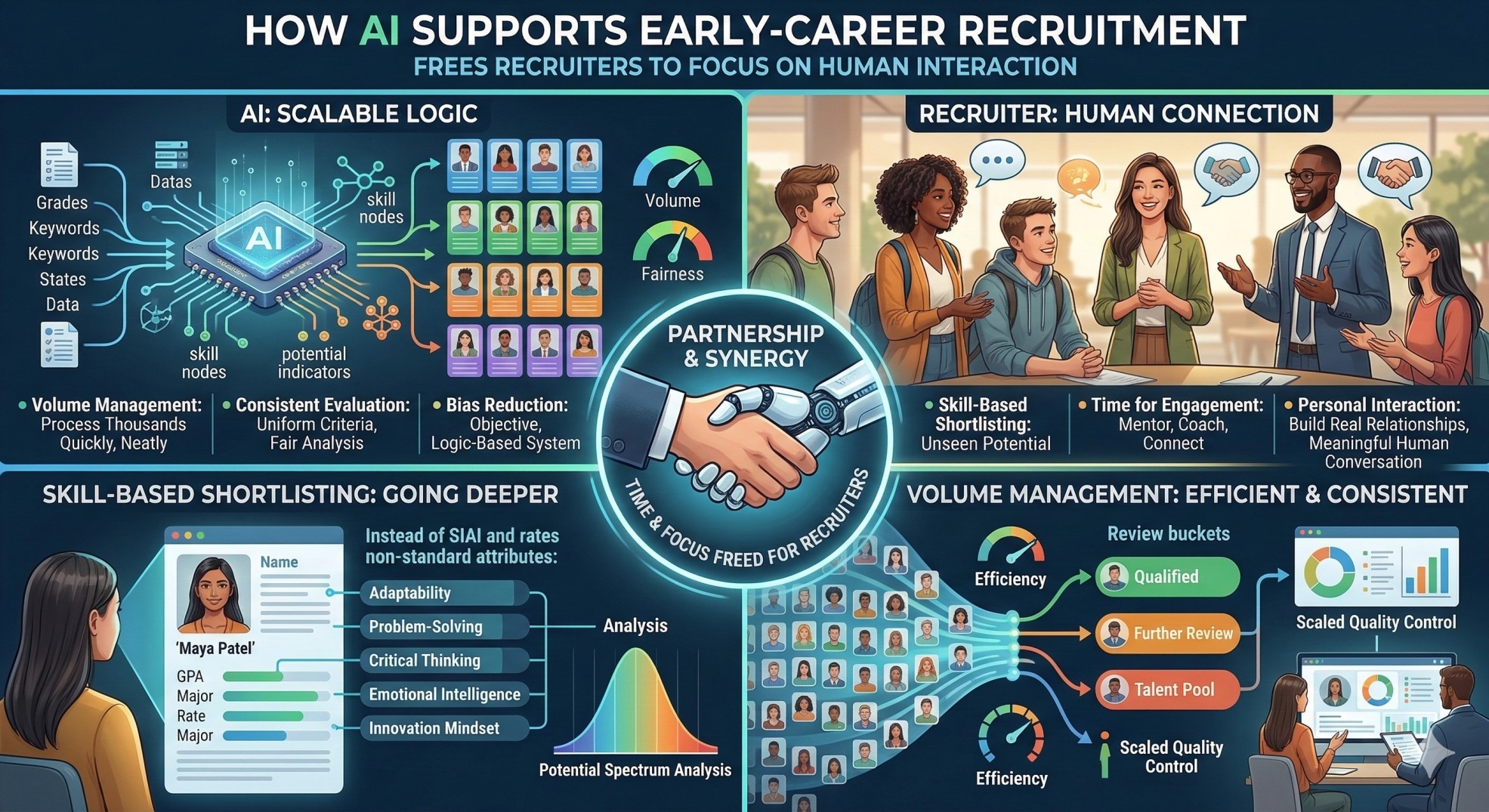
How AI supports early-career recruitment

Organizations leveraging AI in campus hiring experience several benefits:

  • Skill-based shortlisting: Identify potential beyond grades or keywords.

  • Volume management: Quickly process thousands of applications without sacrificing quality.

  • Consistent evaluation: Apply uniform criteria across all applicants to reduce bias.

  • Time for engagement: Allow recruiters to mentor, coach, and connect with candidates personally.

AI handles the repetitive and scalable tasks, while recruiters focus on meaningful human interaction.
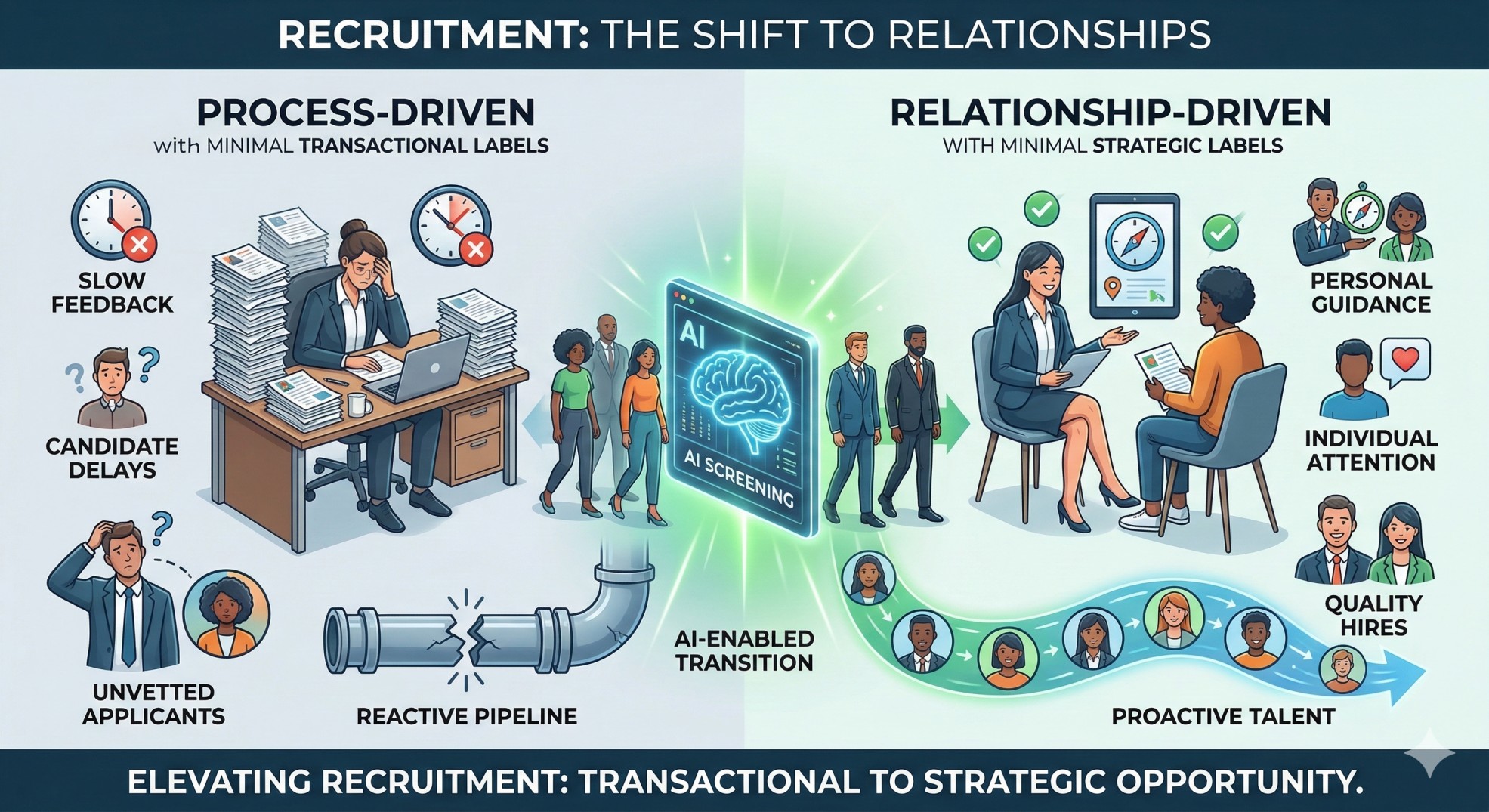
From process-driven to relationship-driven recruitment

With AI managing initial screening:

  • Recruiters can spend more time guiding candidates through the application journey.

  • Candidates receive timely feedback and personalized attention.

  • Hiring managers are presented with higher-quality, well-vetted candidates.

  • Talent pipelines are built proactively, rather than reactively.

This elevates early-career hiring from a transactional process to a strategic opportunity.
A quiet role for platforms in early-career recruitment

Platforms like CBREX support this model by automating resume analysis, skill assessment, and initial matching — all while keeping recruiters in control. AI provides structure and efficiency, leaving humans to focus on engagement, mentorship, and final decisions.

The takeaway

Campus and early-career recruitment doesn’t need to be overwhelming.

AI can handle volume, consistency, and initial evaluation, giving recruiters the bandwidth to connect, guide, and nurture candidates. The result is a recruitment process that is both efficient and human — helping organizations attract, develop, and retain the best early-career talent.

Table of contents

Sign up for regular updates
Get all the news delivered to your inbox.
Thank you! Your submission has been received!
Oops! Something went wrong while submitting the form.

Similar blogs

Read Time :
3 Mins
The Death of the 'Generalist' Agency: Why 2026 Demands a Recruitment Exchange Model
In 2026, AI has made finding candidates easier than ever — but hiring the right ones has become more complex. The traditional generalist recruitment agency model is struggling to keep up with the surge in applications and the need for deeper expertise. Recruitment exchanges are emerging as the new solution, combining specialized vendors with AI-powered filtering to deliver higher-quality candidates faster. By focusing on precision, technical validation, and structured screening, the exchange model helps companies reduce noise, improve offer acceptance rates, and make hiring more predictable.
Read Time :
AI in Niche Hiring: Finding the Needle in the Haystack
Niche hiring often involves searching for candidates with rare skills and specialized expertise. AI helps recruiters identify these candidates faster by analyzing skills, experiences, and career paths across large talent pools. With intelligent matching and automated shortlisting, AI reduces manual search efforts and surfaces high-potential candidates recruiters might otherwise miss, enabling a more precise and efficient hiring process.
Read Time :
AI-Powered Diversity Hiring: Making Inclusion Intentional
AI is helping organizations make diversity hiring more intentional by reducing unconscious bias in early-stage recruitment. Through skill-based screening, anonymized candidate evaluation, and consistent assessment criteria, AI ensures fairer shortlisting while allowing recruiters to focus on inclusive conversations and final hiring decisions.